Over the past few years, reports of young and apparently healthy people collapsing and dying suddenly have caused real concern, and many of these cases have involved the heart. Preparing people for emergencies is our everyday work at Eduforce, so we want to set out plainly what is known, what is not yet known, and what every workplace can do in the meantime.
What Parliament was told
Union Health Minister Mansukh Mandaviya informed Parliament that some young people who had previously had COVID-19 had died suddenly. In the same statement, he made clear that the evidence available at that point was not strong enough to say for certain what had caused these deaths.
That second point matters. When news reports link deaths to a single cause, it is tempting to jump to conclusions. The minister's statement did the opposite: it recognised the cases and the concern, and said that more research was needed before anyone could explain them.
Three studies by ICMR
To understand these deaths, and the reported rise in cardiac arrests after COVID-19, the Indian Council of Medical Research (ICMR) set up three separate studies.
Study 1: what the cases have in common. The first looks at the factors linked to sudden deaths in Indian adults aged 18 to 45. It is designed as a multi-centric, matched case-control study. In simple terms, people who died suddenly are compared with similar people who did not, across several centres, to see which factors differ between the two groups.
Study 2: vaccines and blood clots. The second examines whether COVID-19 vaccination has any effect on thrombotic events, that is, blood clots, in the same 18 to 45 age group. Like the first, it is a multi-centric matched case-control study, but this one is based in hospitals.
Study 3: finding the cause in each case. The third is titled "Establishing the cause of sudden unexplained death in the young". It relies on autopsies, both conventional physical autopsies and virtual autopsies, to identify why each person died.
Between them, the three studies come at the question from different directions: patterns across many cases, one specific suspected factor, and close examination of individual deaths.
What the first study found
The first of the three studies has since been published. Researchers at ICMR's National Institute of Epidemiology (ICMR-NIE) reported its results in the Indian Journal of Medical Research in late 2023: Factors associated with unexplained sudden deaths among adults aged 18-45 years in India (Indian J Med Res 2023;158(4):351-362).
The study covered 47 hospitals across India. It looked at 729 apparently healthy people aged 18 to 45, with no known illness, who died suddenly of unexplained causes between 1 October 2021 and 31 March 2023, and compared them with 2,916 people of the same age and gender from the same neighbourhoods.
Its main findings:
- COVID-19 vaccination did not increase the risk of unexplained sudden death. People who had received at least one dose had lower odds of sudden death; when doses were analysed separately, two doses lowered the odds and a single dose did not.
- Several factors were linked to a higher risk: having been in hospital with COVID-19 in the past, a family history of sudden death, binge drinking in the 48 hours before death, use of recreational drugs or substances, and vigorous-intensity physical activity in the 48 hours before death.
The researchers concluded that past COVID-19 hospitalisation, a family history of sudden death and certain lifestyle behaviours made unexplained sudden death more likely.
The results of the other two studies are not covered in this post.
Why we should not guess
When answers take time to arrive, rumours easily fill the gap. Guesswork can make people anxious about things that may be unrelated, or relaxed about things that really do matter. The responsible course is to follow the evidence as it is published, and in the meantime to focus on what is already known to protect the heart and to save lives.
What we can control: everyday heart health
Whatever the studies conclude, the foundations of a healthy heart stay the same. Eating a balanced diet and exercising regularly are central to staying fit and well at any age. A few simple ways to start:
- Eat regular, balanced meals rather than relying on snacks and fast food through a long shift.
- Find exercise you will keep doing, whether that is walking, cycling, a sport or yoga. Consistency matters more than intensity.
- Move during the working day. Take the stairs, stand up between tasks and walk during phone calls.
- Do not ignore warning signs. Chest pain, breathlessness, fainting or a racing heartbeat should be checked by a doctor promptly.
What this means for workplaces
Sudden collapse does not only happen to older people or to those with a known heart condition. A workplace with a young workforce should not assume that a cardiac emergency is unlikely. A practical checklist for employers and safety teams:
- Train responders on every shift. Make sure people trained in CPR are present whenever work is going on, including nights and weekends.
- Know where your AED is. If your site has a defibrillator, check that it is maintained and that everyone knows where to find it.
- Make 112 easy. Display the emergency number, the site address and the location of the first aid kit and AED near phones and entrances.
- Drill the response. Practise who calls for help, who starts CPR, who fetches the AED and who guides the ambulance in.
- Support healthy habits. Allow time for breaks and movement, provide drinking water and offer healthier food options where you can.
- Encourage people to speak up. Staff should feel able to report symptoms and see a doctor without worrying about their job.
For employees and trainees
You can make a difference to your own heart health and to the people around you:
- look after your diet and stay active
- learn CPR, so you can act if a colleague, friend or family member collapses
- find out where the nearest AED is at work and in your building
- take symptoms seriously, in yourself and in others
Learn to respond
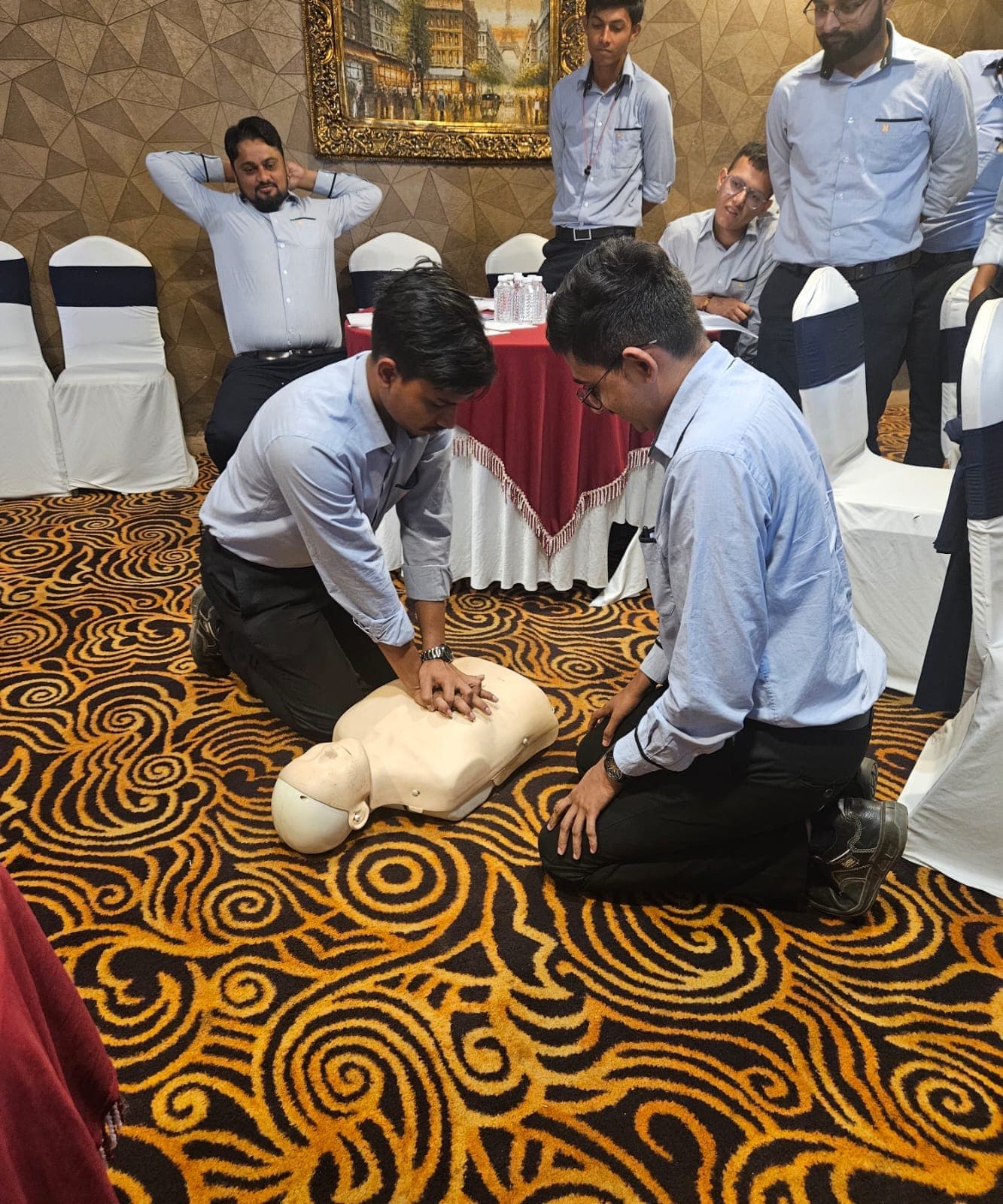
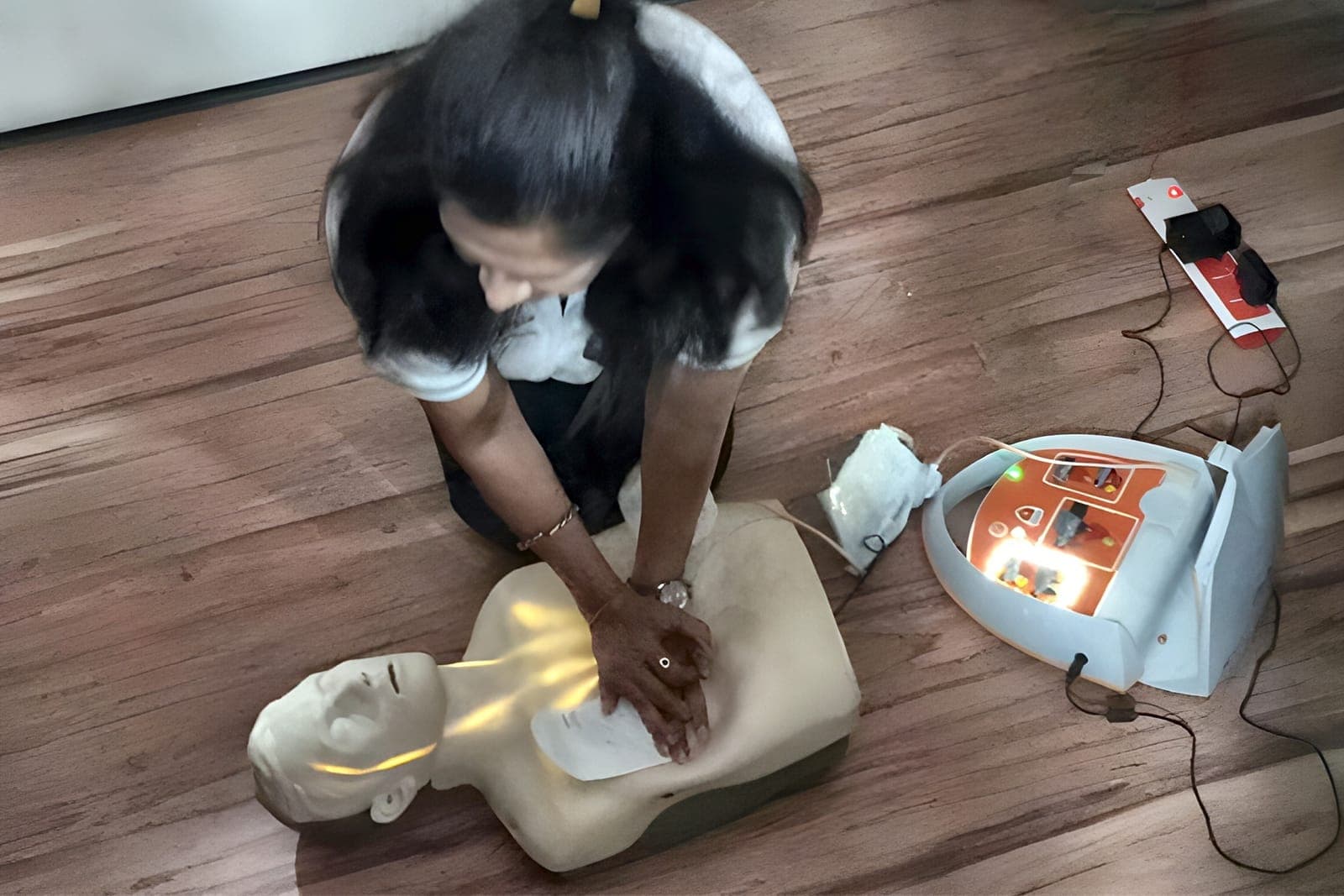
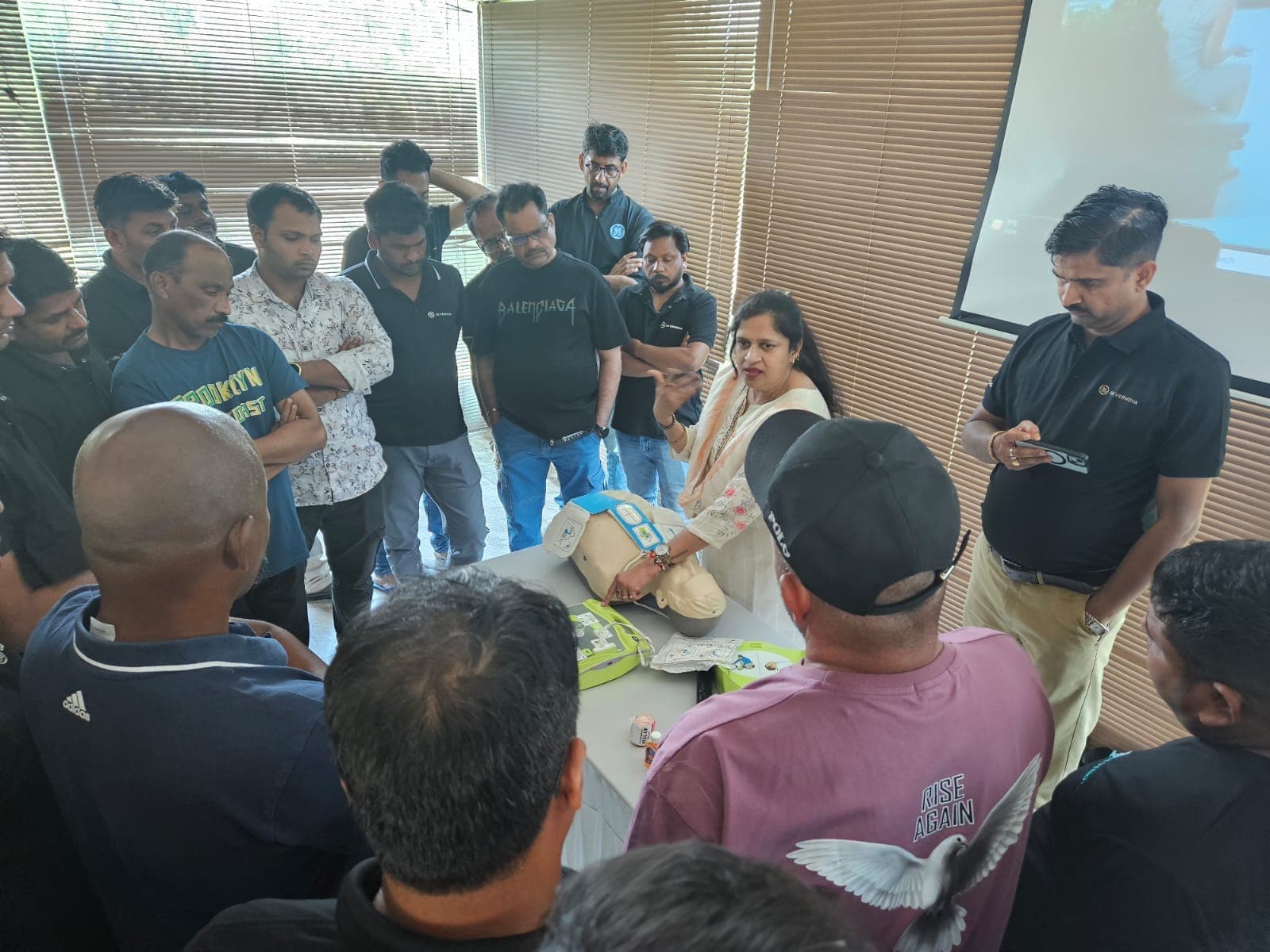
When the heart stops, what happens in the first few minutes matters most. Our First Aid with CPR training prepares workplace responders to assess a casualty, act on life-threatening findings and hand over to professional help. For people who may need to manage a cardiac arrest, our Basic Life Support (BLS) training builds the full sequence of recognition, compressions, ventilation and defibrillation.
To arrange training for your team, write to info@eduforce.in or message us on WhatsApp at 8779291591.
A healthy heart starts with everyday choices, and a prepared workplace starts with trained people.
This article is for general awareness and does not replace medical advice. In an emergency, call 112.
Related training
Need help developing workplace safety capability?
Talk to Eduforce about training, consultancy and safety solutions.
Eduforce Team
EHS Training & Safety Solutions
Practical safety guidance from the Eduforce trainers and consultants — written from the training centre, the classroom and the site.
More about Eduforce