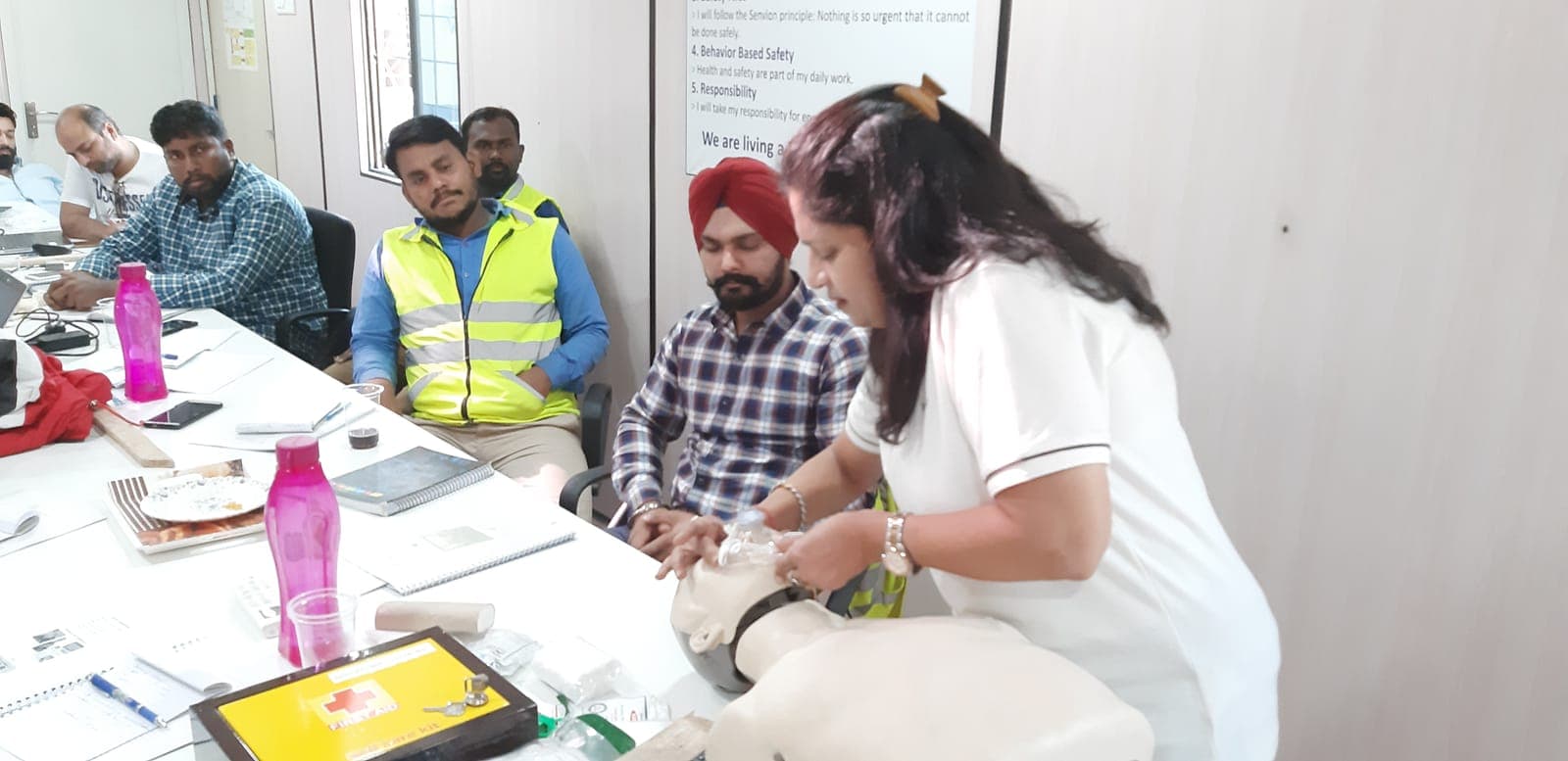
The First Ten Minutes: Why Workplace First Aid Is About Time, Not Kit
The best-stocked first aid box on site cannot help a colleague whose heart has stopped. What matters in the first ten minutes is a trained person and a plan.

Basic life support builds the sequence that keeps circulation going until advanced help arrives — recognition, compressions, ventilation and defibrillation.
A person who is unresponsive and not breathing normally is in cardiac arrest, and what happens next depends on whoever is nearest. Basic life support is the sequence that keeps circulation going until advanced help arrives: recognise the arrest, call for help, start compressions and use a defibrillator.
The programme also covers telling a heart attack, where the person is usually conscious and breathing, from a cardiac arrest, where CPR is needed at once. The techniques are practised alone and as a team until they are automatic.

Responders who may need to manage a cardiac arrest
No dates are currently listed for this programme. Tell us when and where you need it and our team will confirm.
Recorded in Eduforce material as “Basic Life Support”.
Duration, assessment method and the certificate issued vary by programme, and are set out in the written confirmation issued for your engagement. Contact our team for the current details for this programme, including any validity period that applies.

The best-stocked first aid box on site cannot help a colleague whose heart has stopped. What matters in the first ten minutes is a trained person and a plan.

The dangerous pattern is not the dramatic collapse. It is the person who thinks it is indigestion and waits for it to pass.
Programmes run at the Eduforce training centre or on your own site. Tell us the roles involved and our team will confirm the details.