
"Heart attack" and "cardiac arrest" are often used as if they mean the same thing. They don't. Both are emergencies that can kill, but they happen for different reasons, look different and need a different first response. Knowing which is which helps you do the right thing in the minutes that matter most.
Cardiac arrest: the heart stops pumping
In a sudden cardiac arrest (SCA), the heart's electrical activity fails suddenly and without warning, and the heart stops beating effectively. Blood no longer reaches the brain, so the person collapses, loses consciousness and stops breathing normally. There is no pulse.
Without help, death can follow within minutes. The person needs hands-only CPR straight away and, as soon as one can be brought, an automated external defibrillator (AED). Together these give the person their best chance until paramedics take over.
Heart attack: the blood supply is blocked
A heart attack happens when one of the arteries feeding the heart muscle becomes blocked, most often as a result of coronary artery disease. The part of the muscle beyond the blockage is starved of blood.
The person is usually awake and breathing, but may have chest pain that spreads outwards, breathlessness, dizziness or sweating, or may feel faint. In India, call 112 at once and do what the call handler tells you.
Side by side
| Sudden cardiac arrest | Heart attack | |
|---|---|---|
| What goes wrong | The heart's electrical system fails and it stops pumping | An artery supplying the heart muscle is blocked |
| How urgent | Fatal within minutes unless treated | Less immediate, but dangerous without treatment |
| Usual causes | Abnormal heart rhythms, electrolyte imbalances, diseases that weaken the heart muscle | Coronary artery disease; also inflammation or infection of the heart muscle, congenital heart defects and lifestyle factors |
| Warning beforehand | Often none | Usually symptoms |
| First response | Call 112, start CPR, use an AED | Call 112, keep the person calm and resting |
Both demand speed. Left untreated, a heart attack can lead to serious complications or death, so never wait to see whether it settles.
Recognising cardiac arrest
- sudden collapse
- sudden loss of consciousness
- no breathing, or only occasional gasps
- no pulse
Some people notice breathlessness, weakness or palpitations (a racing, fluttering or pounding heartbeat) beforehand, but often there is no warning at all. You do not need to search for a pulse: if someone does not respond and is not breathing normally, treat it as a cardiac arrest.
Recognising a heart attack
- chest pain that may spread outwards
- discomfort in the jaw or neck
- shortness of breath
- sweating
- feeling faint
- nausea or vomiting
- tiredness that is unusual or has no obvious cause
What to do
If you suspect a heart attack:
- Call 112 immediately. Stay calm and give the call handler clear details.
- Do not let the person drive themselves to hospital, and do not wait for the symptoms to pass.
- Give aspirin only if a medical professional tells you to.
- Stay with them, and be ready to start CPR if they collapse.
If someone is in cardiac arrest:
- Call 112, or get someone else to call while you start.
- Begin CPR without delay.
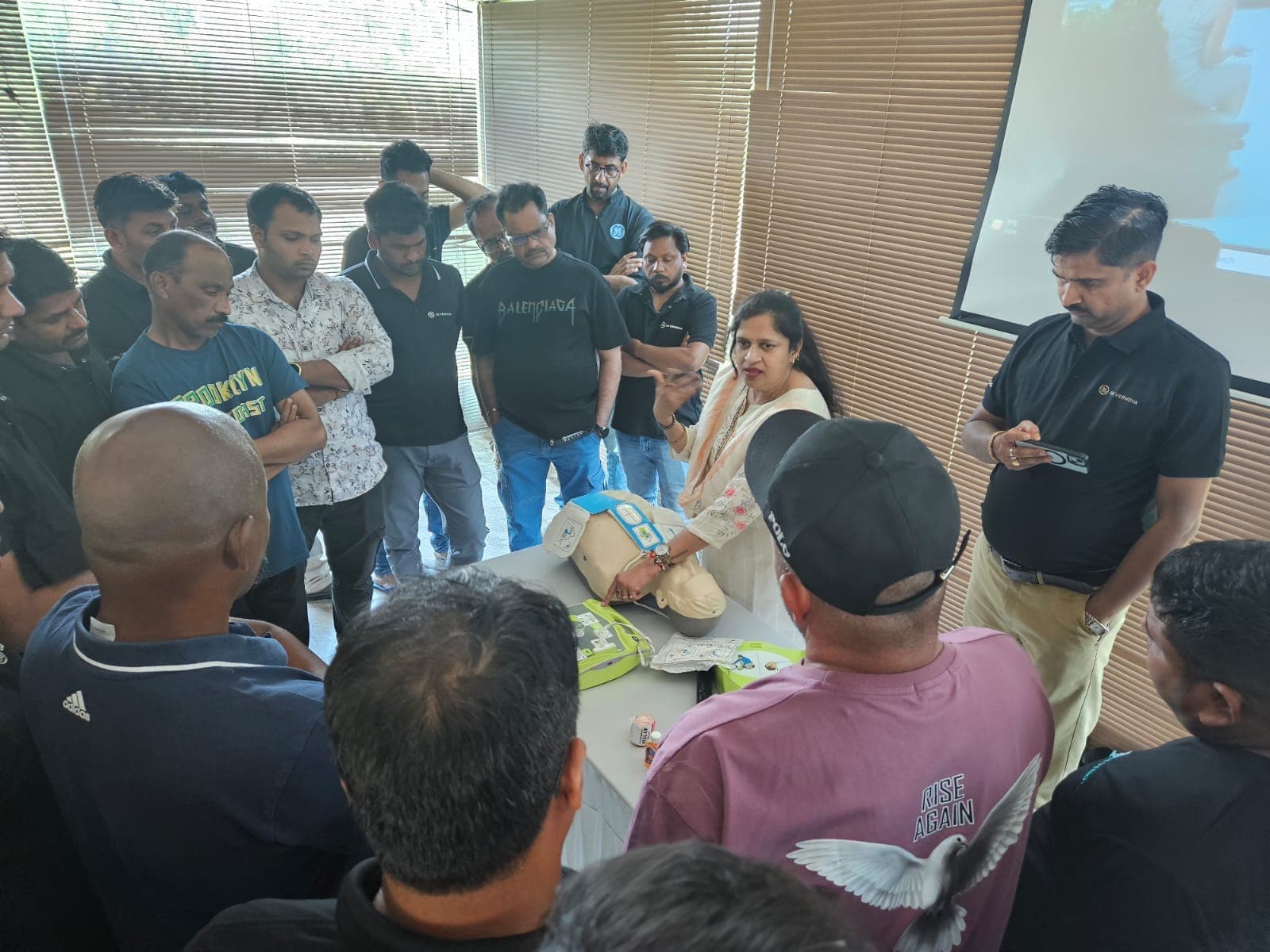
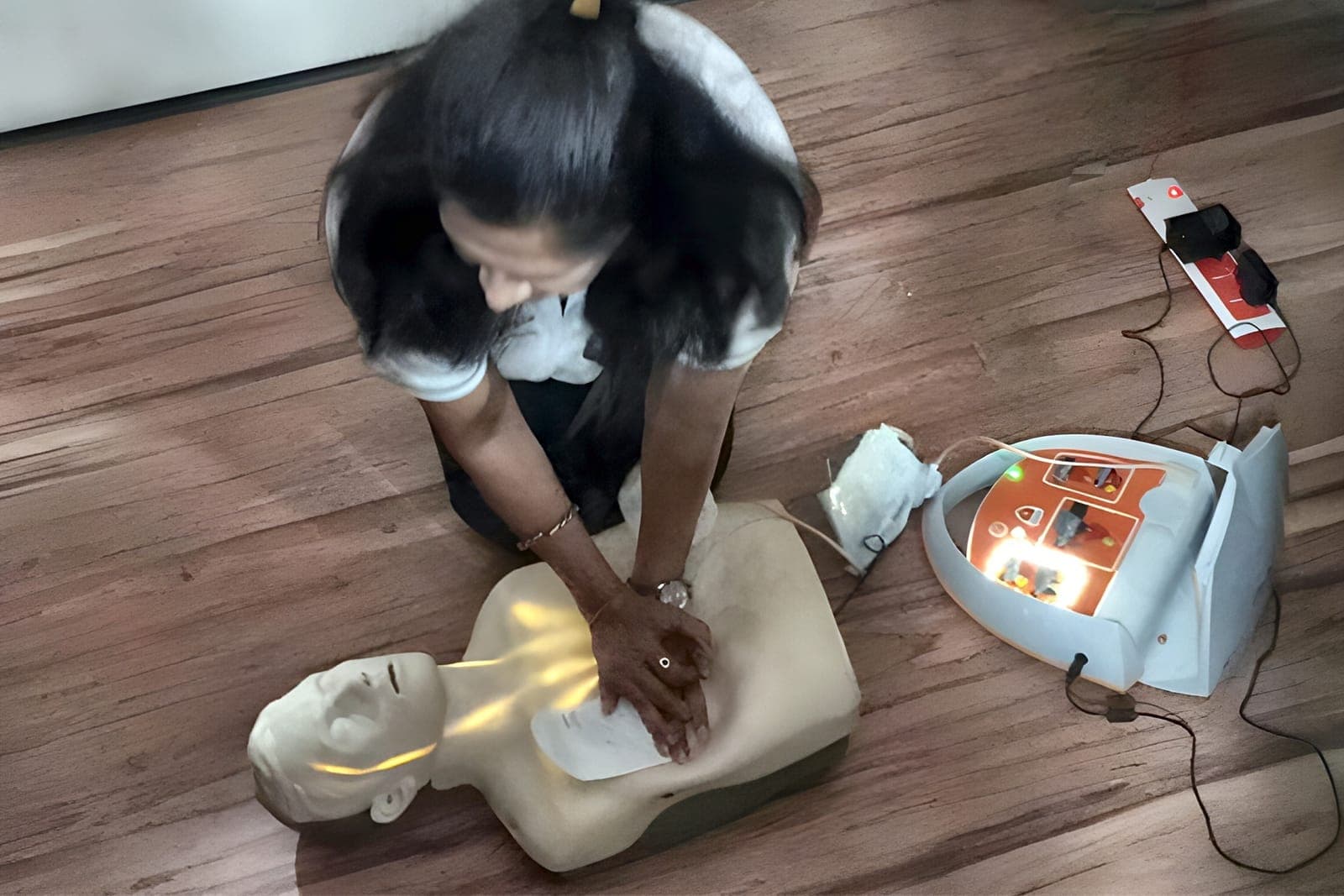
- Use an AED as soon as one arrives, following its spoken prompts.
- Keep going until emergency services take over.
Compression-only CPR in three steps
- Check whether the person responds and is breathing normally.
- Call 112.
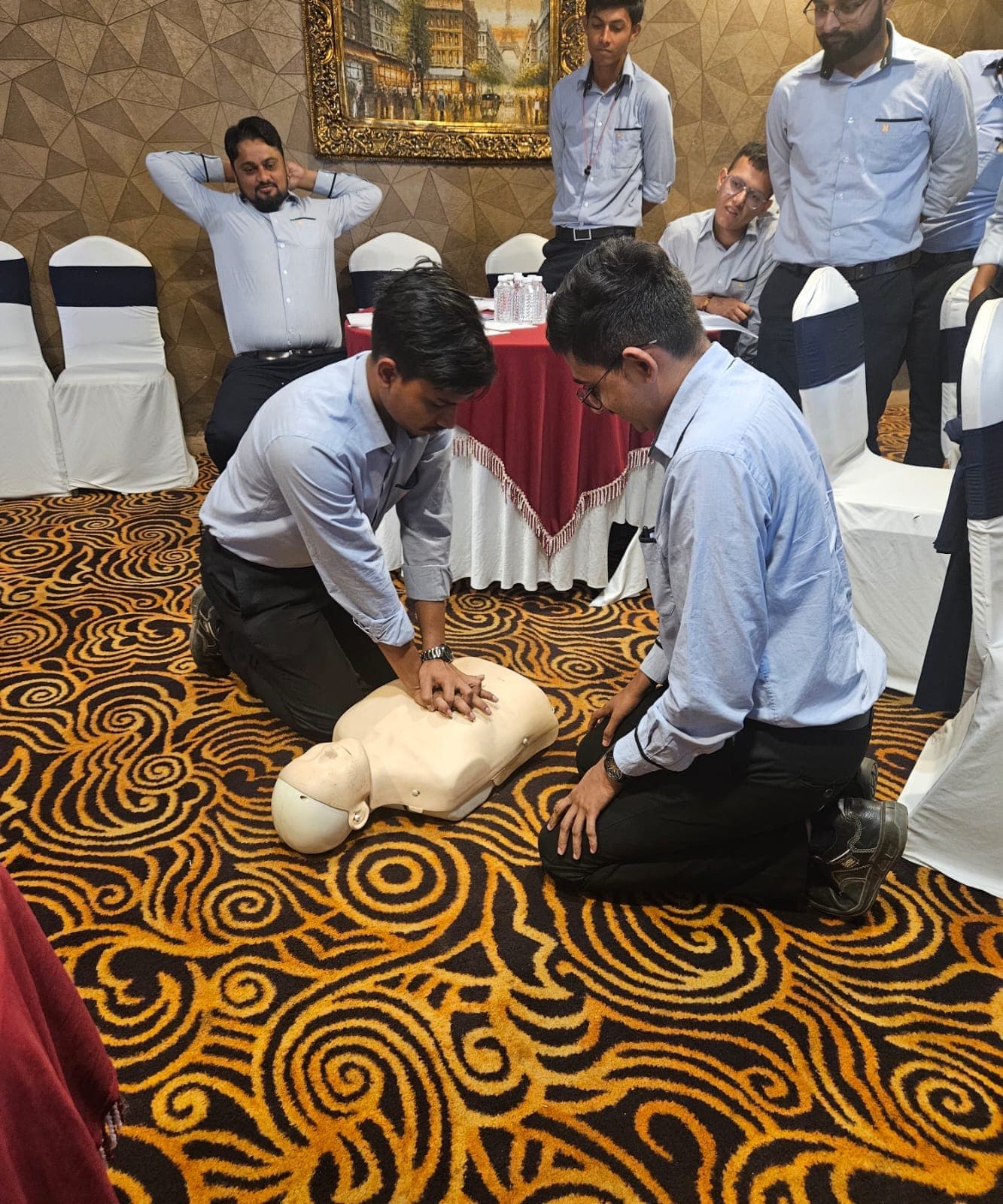
- Compress the centre of the chest, hard and fast, and keep going until help arrives.
The steps are easy to remember, but doing them well under pressure takes practice. Learn compression-only CPR with a trainer and a manikin.
What this means at work
A colleague could suffer either emergency at their desk, on the shop floor or on site. Employers and safety teams can prepare by:
- training first aiders on every shift, not only during office hours
- keeping an AED where people can reach it quickly, checking it regularly and making sure everyone knows where it is
- displaying 112 and the site address near phones and entrances
- running short drills on who calls, who starts CPR and who fetches the AED
- briefing staff on the difference: for a heart attack, call 112 and keep the person still; for a cardiac arrest, call 112, start CPR and use the AED
Be ready to respond
Our First Aid with CPR training prepares workplace responders to assess a casualty, act on life-threatening findings and hand over to professional help. Basic Life Support (BLS) training builds the full sequence for managing a cardiac arrest, and First Aid and CPR Training to International Guidelines is based on current American Heart Association (AHA) guidelines. To arrange a session, write to info@eduforce.in or message us on WhatsApp at 8779291591.
Knowing the difference between these two emergencies, and how to act in each, can save a life.
This article is for general awareness and does not replace hands-on training or medical advice. In an emergency, call 112.
Related training
Need help developing workplace safety capability?
Talk to Eduforce about training, consultancy and safety solutions.
Eduforce Team
EHS Training & Safety Solutions
Practical safety guidance from the Eduforce trainers and consultants — written from the training centre, the classroom and the site.
More about Eduforce