
Competence is built, not delivered.
Every Eduforce programme follows the same path — understand the work, identify what competence it demands, build the programme around it, and assess what participants can actually do.
From requirement to competence.
Eight stages, each feeding the next. The last one feeds back into the first.
- 01
Understand client requirements
Every engagement starts with the work itself — the roles involved, the sites, and the conditions people actually operate in.
- Roles and levels to be trained, from workers through to management
- Sites, environments and the working methods in use
- Any existing training records and what they already cover
- 02
Training needs analysis
We establish what the workforce needs to be able to do, and where the shortfall between that and current capability lies.
- Current competence against the demands of the role
- Gaps in existing provision
- Priorities based on risk rather than convenience
- 03
Identify competencies and risks
Training is anchored to the hazards present and the competencies required to work safely around them.
- Hazard identification for the activity concerned
- Competencies the role requires
- Where rescue and emergency capability is needed on site
- 04
Customise the training programme
Eduforce formulates training and modules around the client's own requirement, so content reflects the working method rather than a fixed syllabus.
- Programme selection and sequencing
- Content tailored to the industry and working method
- Delivery at the Eduforce training centre or on the client's site
- 05
Theory and practical learning
Each programme pairs classroom theory with supervised practical work, so participants apply what they have just learned.
- Classroom learning covering principles and regulation
- Practical demonstrations by the trainer
- Hands-on exercises under direct supervision
- 06
Scenario and simulation-based practice
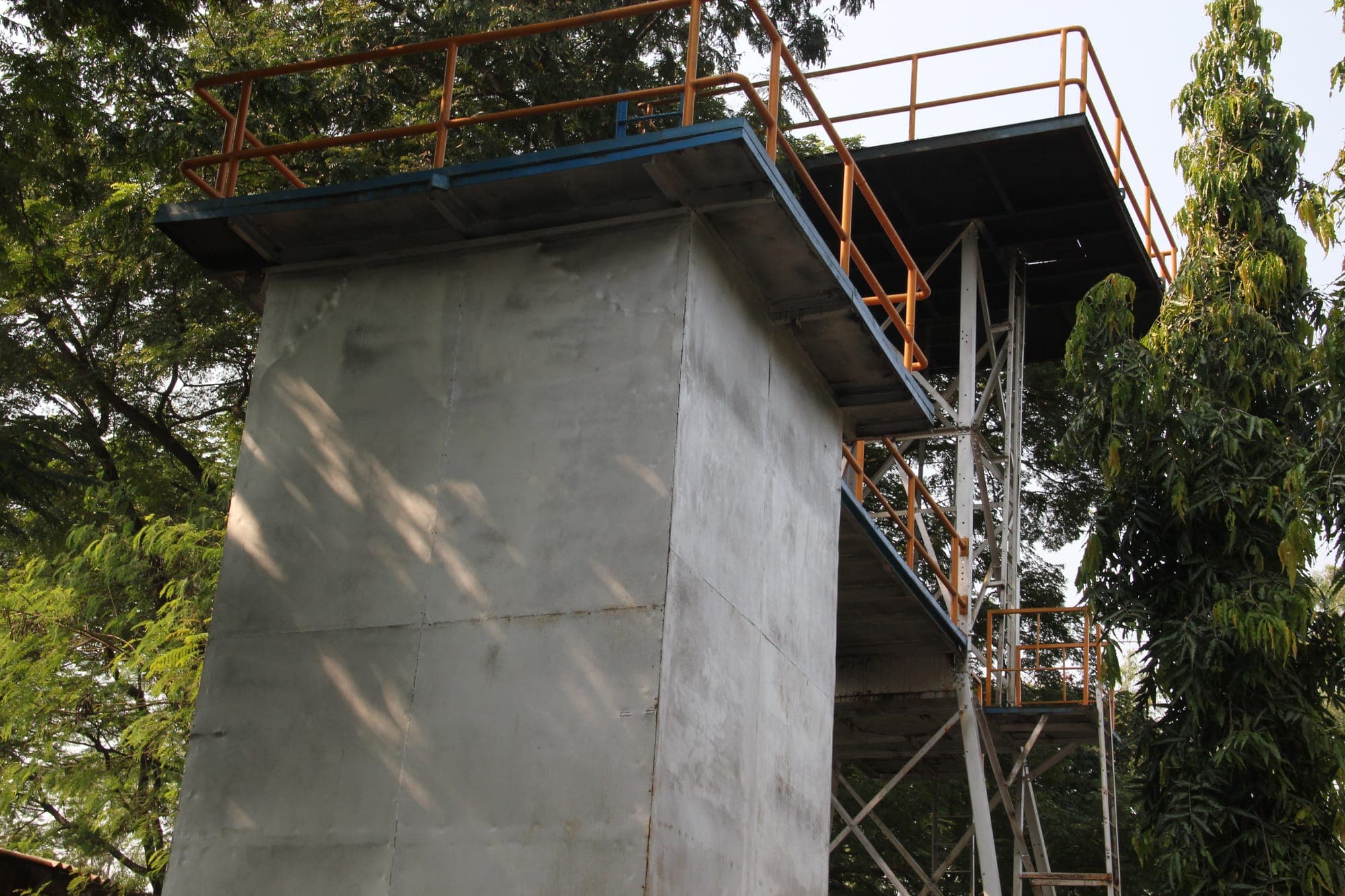
Participants rehearse against realistic conditions at the training simulator — high towers, chimneys, scaffolds and purpose-built confined spaces.
- Scenario-based exercises drawn from real industry incidents
- Rescue simulations at height and in confined space
- Industry-specific examples relevant to the participants' work
- 07
Assessment and competency evaluation
Participants are assessed as they work, so competence is judged on what they demonstrate rather than what they recall.
- Ongoing assessment through direct observation
- Practical demonstration of the required skills
- Theory checks where the applicable standard calls for them
- 08
Feedback and continuous improvement
Findings feed back to the client, and into how the next programme is delivered.
- Participant feedback captured during the programme
- Reporting back to the client organisation
- Refinement of content for subsequent deliveries
Theory, then practice, then pressure.
Classroom learning
Principles, regulation and the reasoning behind each control measure.
Practical demonstrations
The trainer shows the technique correctly before participants attempt it.
Hands-on exercises
Participants perform the skill under direct supervision, at a low instructor-to-participant ratio.
Scenario-based training
Exercises built around realistic incidents rather than idealised conditions.
Rescue simulations
Rescue at height and in confined space rehearsed at the training simulator.
Industry-specific examples
Content framed around the participants' own sector and working method.
Let's build the right programme for your team.
Tell us the roles and working conditions involved and we will map out an appropriate training pathway.