
GWO Solar Safety Training
Core safety training for personnel working in utility-scale solar PV environments.
The Training
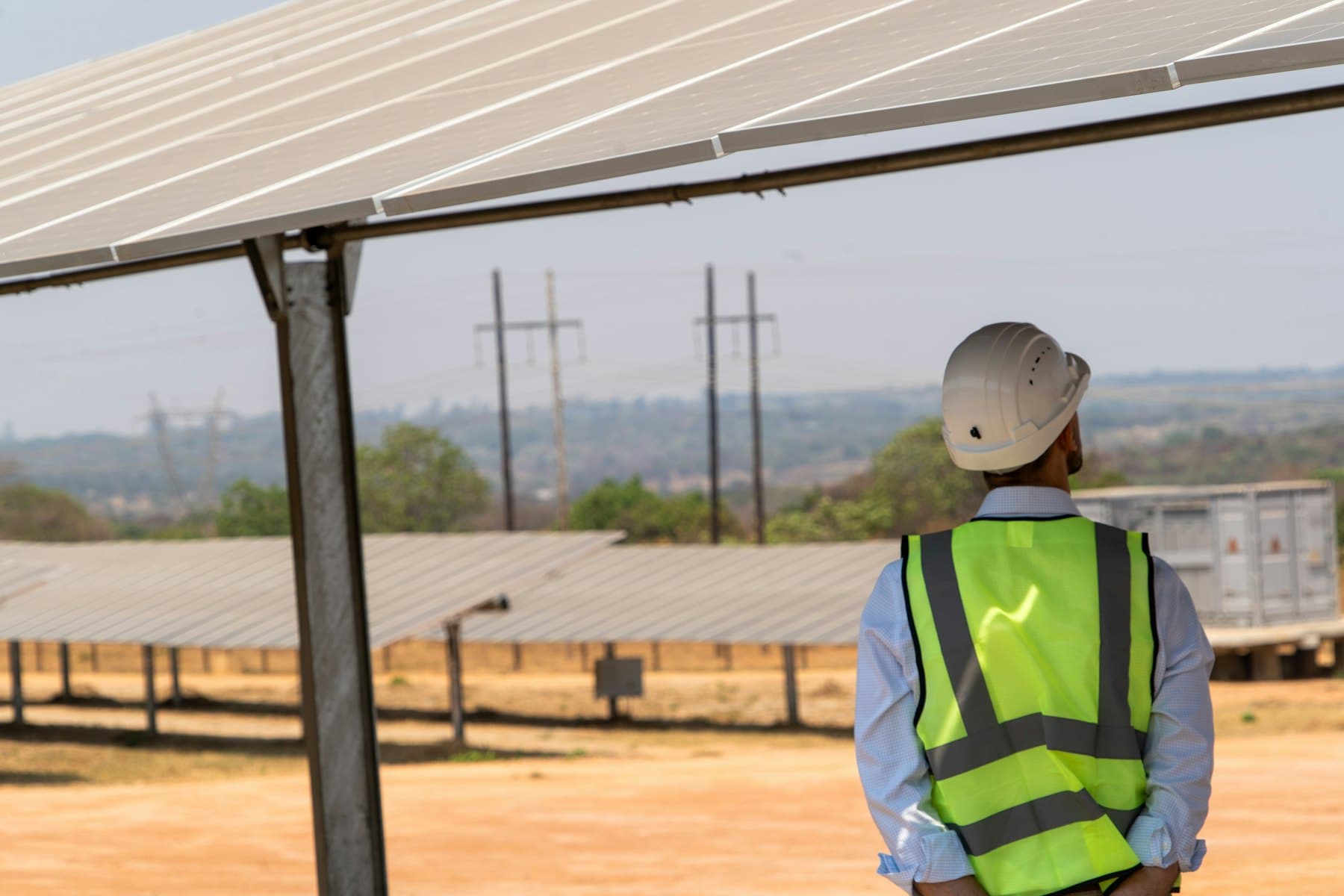
Training overview
Developed by GWO together with the Global Solar Council, Solar Safety Training builds the everyday safety capability required on a utility-scale solar PV site. It is organised into three modules — First Aid Awareness, First Aid, and Safe Solar Work — so an employer can match the depth of training to each role rather than sending everyone on the same course.
The first aid element is offered at two levels. First Aid Awareness gives every person on site a working baseline for a medical emergency in half a day, while the fuller First Aid module prepares designated responders to assess and treat a casualty properly. Safe Solar Work then covers the day-to-day safety disciplines of a solar site: fire, manual handling, work at height, and housekeeping and hand tools.
Training is delivered in facilities that replicate an authentic utility-scale solar working environment as closely as possible, so the hazards participants practise against are the ones they will actually meet — heavy panels, elevated temperatures, array structures and live PV electrical systems.
Why this training matters
Utility-scale solar sites combine electrical hazards, repetitive heavy handling and work at height, often outdoors in high temperatures and at distance from emergency services. The standard exists so that a worker's safety baseline means the same thing across employers and projects in a fast-growing sector.
What you will learn
- Recognise life-threatening conditions and give lifesaving first aid until the casualty can be handed over
- Manage fire hazards on a solar site and respond correctly to a fire emergency
- Apply correct manual handling technique to panels, mounting equipment and components
- Work safely at height on solar array structures using appropriate fall protection
- Maintain good housekeeping and use hand tools safely around live PV systems
Training pathways
Initial Training
Delivered across the three modules below, with first aid available at two levels according to the role.
Training content
First Aid Awareness
A half-day baseline in lifesaving first aid for every person working on a solar site.
3 hours 45 minutes
View ModuleFirst Aid
The fuller first aid route for personnel designated as responders on a solar site.
7 hours
View ModuleSafe Solar Work
The day-to-day safety disciplines of a utility-scale solar site, across four areas.
7 hours 40 minutes
- Fire Awareness
- Manual Handling
- Work at Height
- Housekeeping and hand tools
Key knowledge
- Primary survey methodology (C-A-B-C) and how to prioritise a casualty
- Combustion and fire spread, and the suppression challenges specific to PV arrays
- TILE risk assessment — task, individual, load and environment
- Personal fall protection systems, anchor points and equipment inspection
- Electrical hazard awareness in a solar working environment
Practical skills
- Controlling catastrophic bleeding with tourniquets and pressure dressings
- Delivering CPR and operating an AED safely
- Selecting, inspecting and using fall arrest equipment including self-retracting lifelines
- Using firefighting equipment in scenario-based exercises
- Applying ergonomic lifting technique to panels and mounting hardware
Safety and risk awareness
- Electrical fire risk from PV systems and fire propagation across large arrays
- Handling heavy panels and mounting equipment, often in elevated temperatures
- Fatigue from sustained outdoor physical work
- Roof and array work at varying heights with complex structures
- Weather-related fall risk from wind and precipitation
Competencies
- Perform a primary survey and act independently in a medical emergency
- Assess load characteristics and environmental factors before handling
- Demonstrate safe climbing, positioning and equipment inspection at height
- Recognise the limits of your own training and call for help appropriately
Key learning outcomes
- Emergency response on a solar site
- Fire awareness and response
- Manual handling
- Work at height
- Housekeeping and hand tool safety
Assessment
Ongoing assessment throughout the course, recorded on the GWO Participant Performance Assessment form. Practical work is delivered at a 1:6 instructor-to-participant ratio so each participant is directly observed.
Practical training
Every module is exercise-led, with scenario training set in solar conditions rather than generic classroom examples. Theory runs at a 1:12 instructor ratio and practical work at 1:6.
Important information
- Maximum 8 hours contact time per training day, and a maximum of 10 training days.
- Training facilities must replicate an authentic utility-scale solar working environment as closely as possible.
- A participant who does not demonstrate the learning outcomes attends a new safety training rather than a remedial session.