A death that brought the question home
Nana Patekar, the veteran actor, died at his home in Goa on 8 October 2026 at the age of 75. The first reports pointed to a suspected cardiac arrest. We send our condolences to his family and to the many people who admired his work.
News like this makes many of us ask the same question: if someone collapsed in front of me, would I know what to do? A day later, on 9 October 2026, The Times of India's Mumbai edition put that question to senior doctors at AIIMS Delhi. This article sets out what they said, and what it means for the places where most of us spend our days: our homes and our workplaces.
The doctors' message was simple. Once the heart stops, survival is decided in minutes, not hours, and the person best placed to help is usually not a doctor. It is whoever happens to be standing nearby.
Cardiac arrest and heart attack are not the same thing
In a sudden cardiac arrest, the heart stops pumping effectively without warning. The person drops, does not respond when spoken to or touched, and their breathing stops or becomes abnormal. If nobody acts, death follows within minutes.
According to Dr Ambuj Roy, Professor of Cardiology at AIIMS Delhi, a cardiac arrest can be the final stage of a number of different serious medical emergencies. His practical advice to The Times of India: when someone feels unwell, and particularly at night, do not wait. Call for help and get them to hospital.
The two terms are often used as if they mean the same thing. They don't, and the response is different:
| Heart attack | Cardiac arrest | |
|---|---|---|
| The problem | Blood supply to part of the heart muscle is blocked | The heart's electrical rhythm fails, so it no longer pumps |
| What you usually see | The person is conscious and breathing, often with chest pain | The person has collapsed, does not respond and is not breathing normally |
| Your first actions | Call 112 and get them to hospital quickly | Call 112, begin CPR immediately, and use an AED if one is close by |
One can lead to the other: a heart attack may set off a cardiac arrest. Treat both as emergencies, and never wait for symptoms to settle on their own.
The clock starts at the moment of collapse
Dr Rakesh Garg, a professor at AIIMS who was involved in developing India's CPR guidelines, puts a number on the urgency: for each minute that passes without CPR, the chance of survival drops by 7 to 10%.
The doctors described a short and unforgiving timeline:
- First 2 minutes: this is when CPR should start, Dr Roy said, and a defibrillator should be used as soon as one can be brought.
- 8 to 10 minutes: if nobody has kept blood moving by this point, Dr Garg warned, professional help may arrive too late.
- 10 to 15 minutes: without oxygen, the brain can be injured.
In a crowded city like Mumbai, an ambulance reaching the scene inside two minutes is rare. Whatever happens in those first minutes depends on the people who are already there.
At present, too few of them step in. Figures reported by The Week estimate that only 1.3% to 9.8% of people who suffer a cardiac arrest in India receive CPR from a bystander, compared with around 30% worldwide. Over 80% of out-of-hospital cardiac arrests take place at home, so the rescuer is most often a relative.
Hands-only CPR for an adult, step by step
You do not need a certificate, and you do not need to give rescue breaths, to begin. According to Dr Garg, anyone who finds a collapsed adult can start compressions using their hands alone, as long as the person does not respond and is not breathing normally. India's Compression-Only Life Support (COLS) guidelines recommend the same approach for members of the public.
- Make sure it is safe, then check. Look for dangers such as traffic or electricity. Tap the person firmly on the shoulders and call out to them. If there is no response and no normal breathing (occasional gasps do not count), act as if it is a cardiac arrest.
- Get help coming. Call 112, the national emergency number, or point at one person and ask them to call. Use the speakerphone so your hands stay free. Send someone else to fetch an AED.
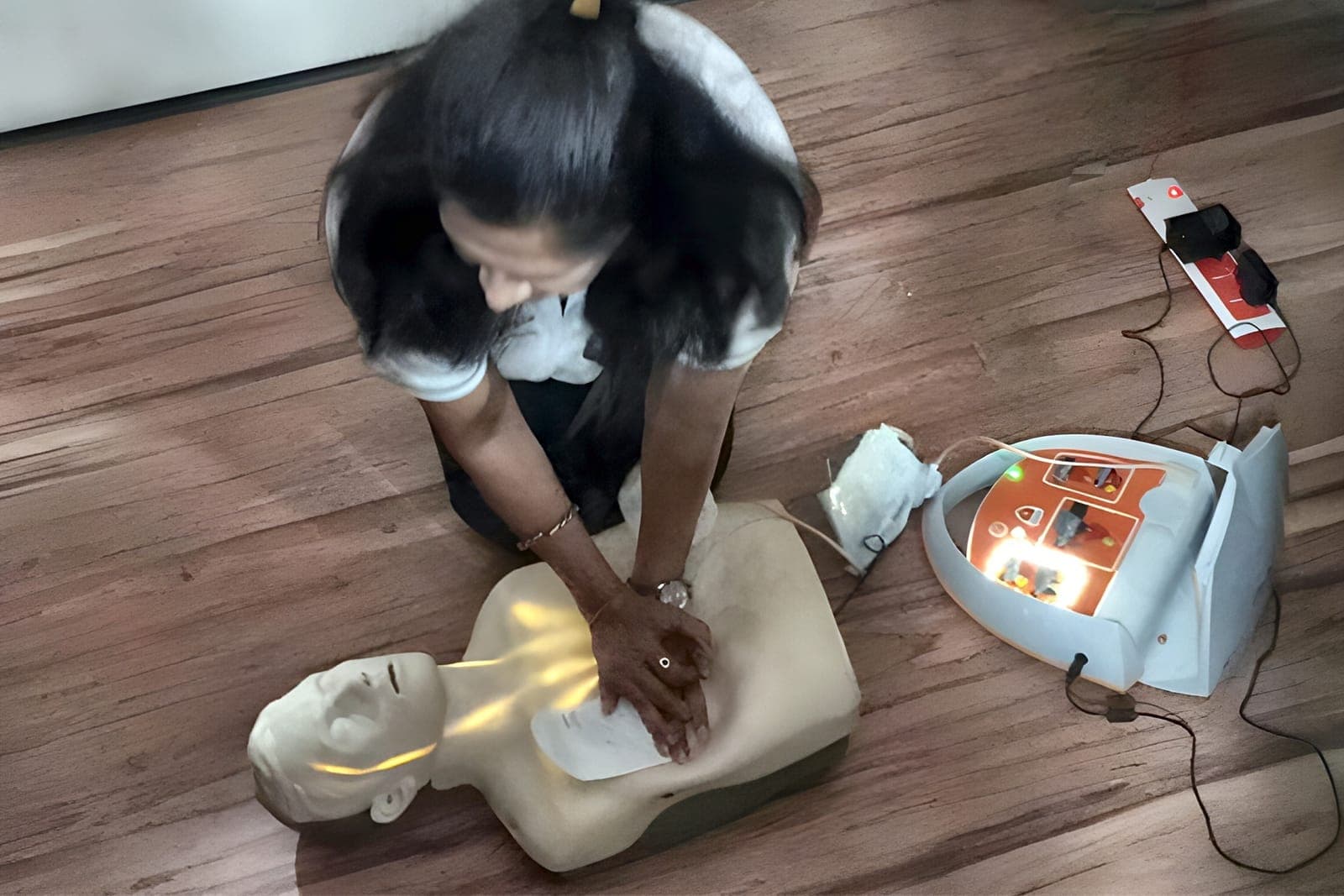
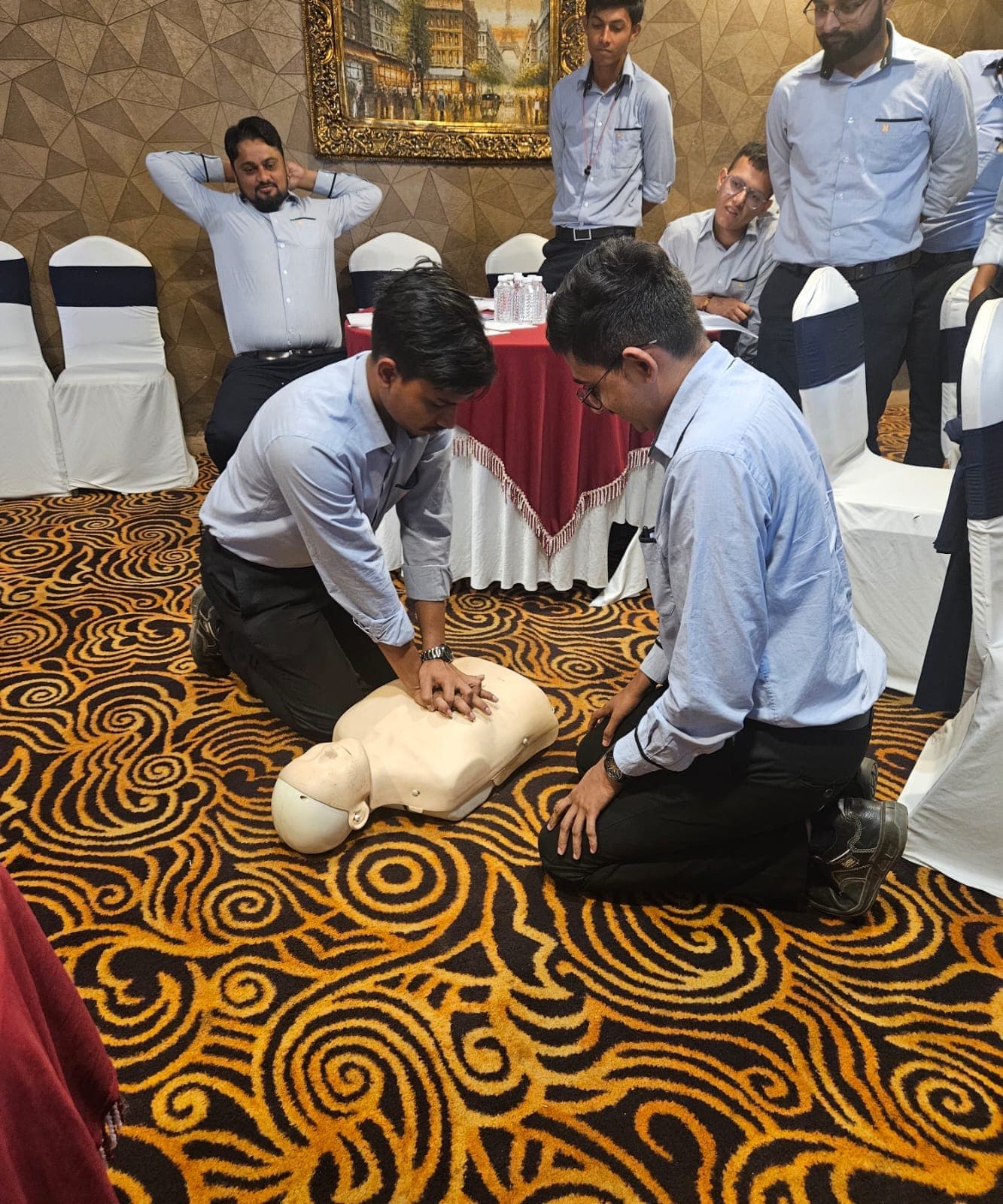
- Place your hands. Kneel at the person's side. Put the heel of one hand on the middle of the chest, over the lower half of the breastbone, then place your other hand on top and interlock your fingers.
- Compress hard and fast. With straight arms and your shoulders directly above your hands, push the chest down 5 to 6 cm (roughly 2 inches), at a rate of 100 to 120 compressions per minute. Allow the chest to come all the way back up between pushes.
- Do not stop. Continue until an AED is ready to use, a trained responder takes over, or the person begins to breathe normally. If there is a second rescuer, change over every 2 minutes, because compressions weaken as you tire.
Compressions do the heart's pumping job by hand. They cannot replace a normal heartbeat, but they move enough blood to keep the brain and other organs alive until help arrives.
Children and infants need a different technique, and it is best learned with hands-on practice in a certified course.
Bring the defibrillator
CPR keeps blood circulating; a defibrillator is the device that can shock the heart back into a normal rhythm. Dr Roy emphasised using one as early as possible.
An AED (automated external defibrillator) is designed for people with no medical background, and it speaks instructions aloud:
- Turn it on and do what the voice tells you.
- Stick the pads on the person's bare chest in the positions shown on the pads.
- Make sure nobody is touching the person while the AED analyses the rhythm or delivers a shock.
- Go straight back to compressions afterwards and keep following the prompts.
More and more offices, malls, airports, gyms and housing societies now have AEDs. Find out today where the closest one is at your workplace and where you live.
Symptoms that deserve attention
Dr Garg warned against dismissing symptoms that have no obvious explanation, particularly in people with risk factors for heart disease. For people who live on their own, he said, recognising warning signs early and seeking help fast is even more important.
Seek help immediately for:
- Pain, pressure or tightness in the chest, especially if it moves into an arm, the jaw, the neck or the back
- Breathlessness
- Sudden sweating, feeling sick or vomiting
- Feeling dizzy or light-headed, or fainting
- A heartbeat that is racing or irregular
- Unexplained, unusual tiredness
Risk is greater in people with high blood pressure, diabetes, high cholesterol or a history of heart problems, in smokers, and in those with heart disease in the family.
When these signs appear, call 112. Do not drive yourself to hospital, and do not wait to see whether the symptoms pass.
What this means for workplaces
A collapse at work follows the same clock as a collapse at home. Whether a colleague survives can depend on preparations made long before the day it happens. A practical checklist for employers and safety teams:
- Know your AED. Check whether your site has one, where it is, and that its pads and battery are in date. Make sure everyone, including night and weekend shifts, knows the location.
- Have trained people on every shift. CPR is only useful if someone present can do it. Plan cover for every shift and every building, not just office hours.
- Make 112 the first instinct. Display the emergency number, the site address and the location of the AED and first aid kit near phones and at entrances, so a caller can give clear directions.
- Practise. Run a short collapse drill: who calls, who starts compressions, who fetches the AED, and who meets the ambulance at the gate.
- Take symptoms seriously. Encourage staff to report chest pain or breathlessness straight away, without worrying about interrupting work.
- Refresh skills. Compression technique fades without practice, so plan regular refresher sessions.
Practise CPR before the day you need it
Dr Garg's advice to families was to learn basic CPR, so that a relative can start compressions until the ambulance gets there. Reading builds understanding; practice on a manikin builds the confidence to act.
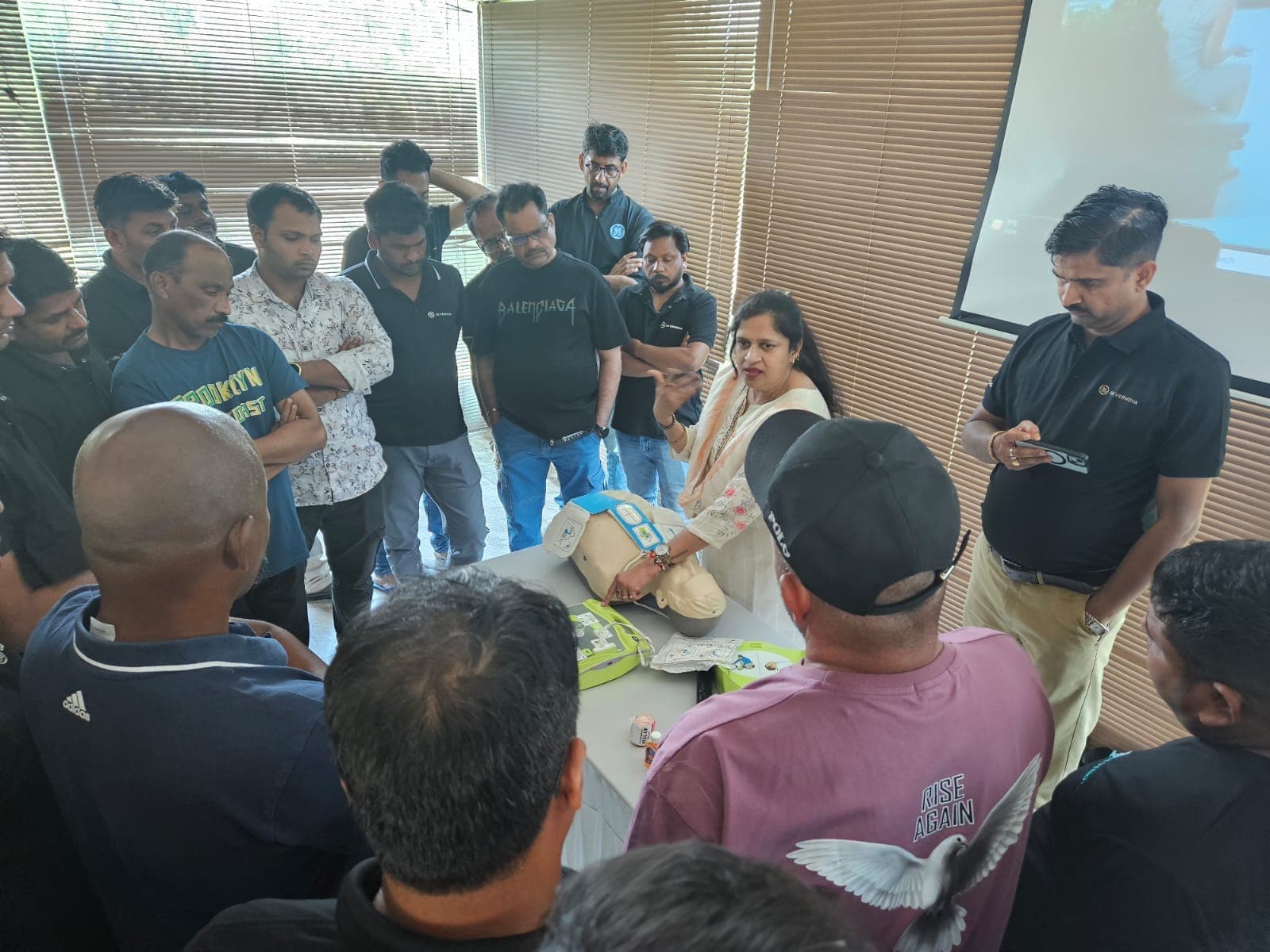
Our First Aid with CPR training prepares workplace responders to assess a casualty, act on life-threatening findings and hand over to professional help. It covers:
- recognising cardiac arrest quickly
- giving effective chest compressions on a training manikin
- using an AED
- responding to choking, bleeding and other common emergencies
For responders who may need to manage a cardiac arrest in more depth, our Basic Life Support (BLS) training builds the full sequence of recognition, compressions, ventilation and defibrillation.
Sessions are available for individuals and families as well as for schools, housing societies and workplaces. To arrange one, write to info@eduforce.in or message us on WhatsApp at 8779291591.
Someone close to you could be the next person to collapse. Learning CPR now means you will be ready to help them.
This article is for general awareness and does not replace hands-on CPR training or medical advice. In an emergency, call 112.
Source: The Times of India, Mumbai edition, 9 October 2026.
Related training
Need help developing workplace safety capability?
Talk to Eduforce about training, consultancy and safety solutions.
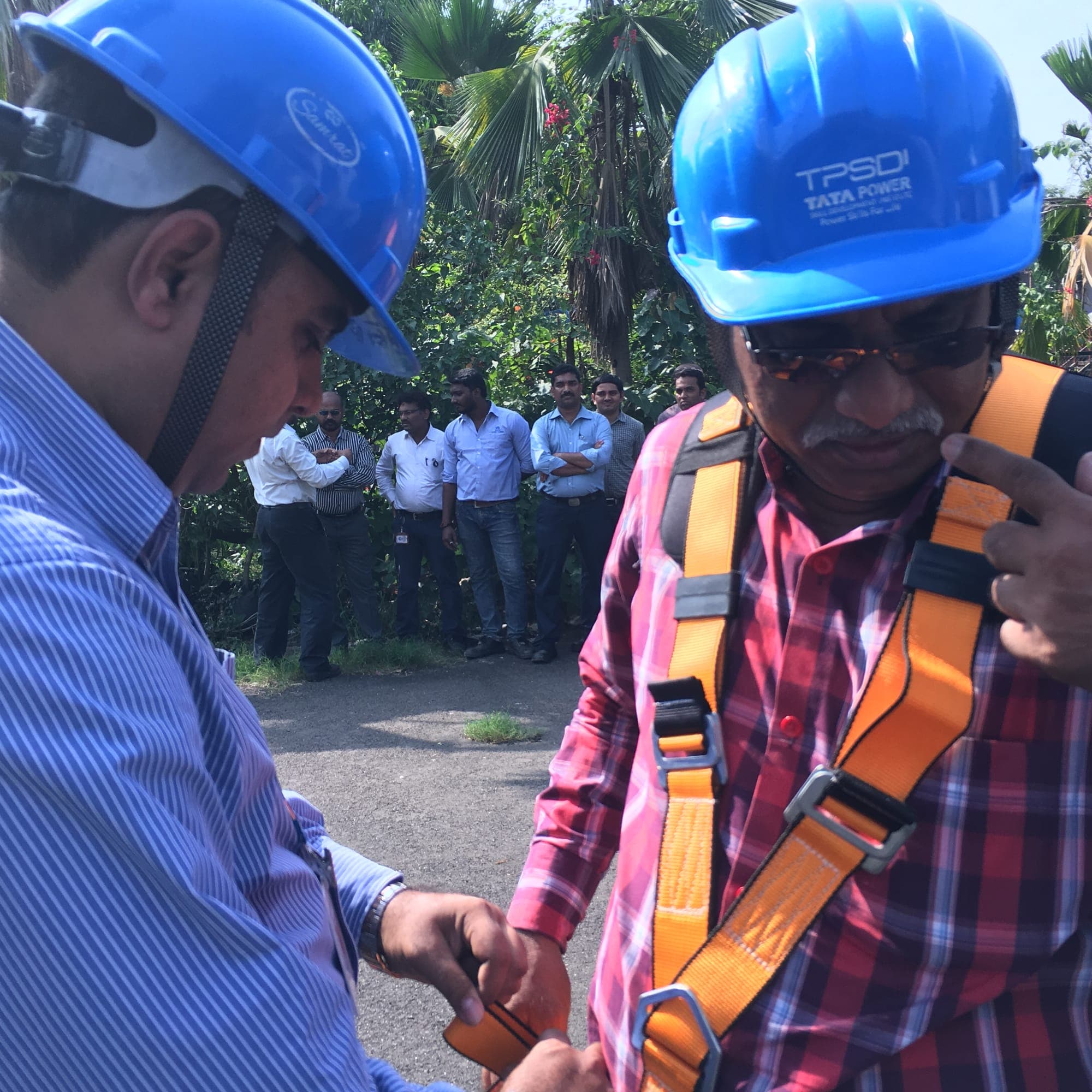
Eduforce Team
EHS Training & Safety Solutions
Practical safety guidance from the Eduforce trainers and consultants — written from the training centre, the classroom and the site.
More about Eduforce