
Emergencies do not choose convenient moments. A colleague collapses during a presentation. A worker cuts a hand badly on the shop floor. A child chokes at the dinner table. In each case, the person who knows what to do can keep someone alive until professional help arrives, and that person could be you.
Here are five life-saving skills that every employee should learn, and how training builds the confidence to use them. For an overview of training options, see our guide to first aid training in Mumbai.
1. CPR and using an AED
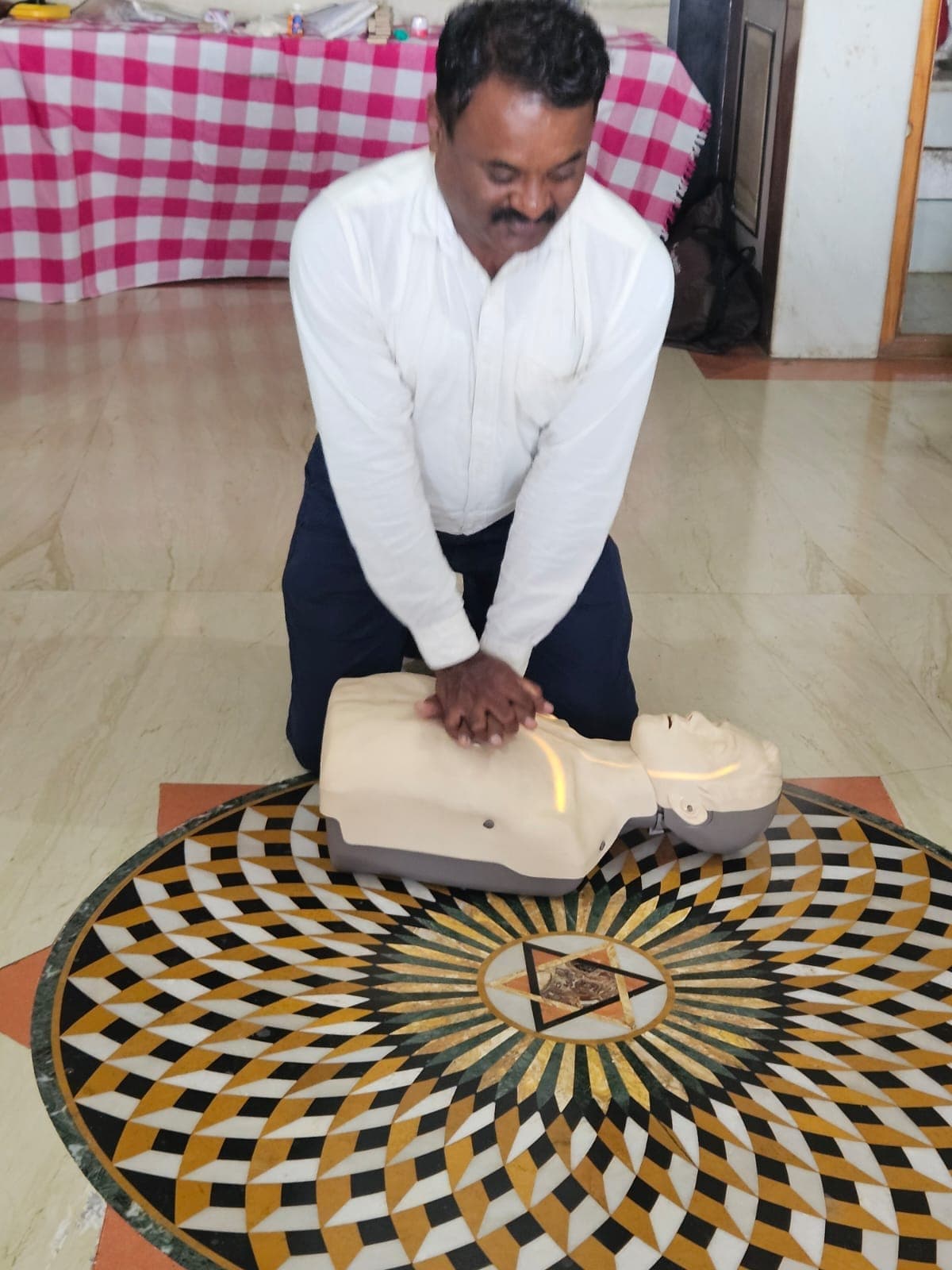
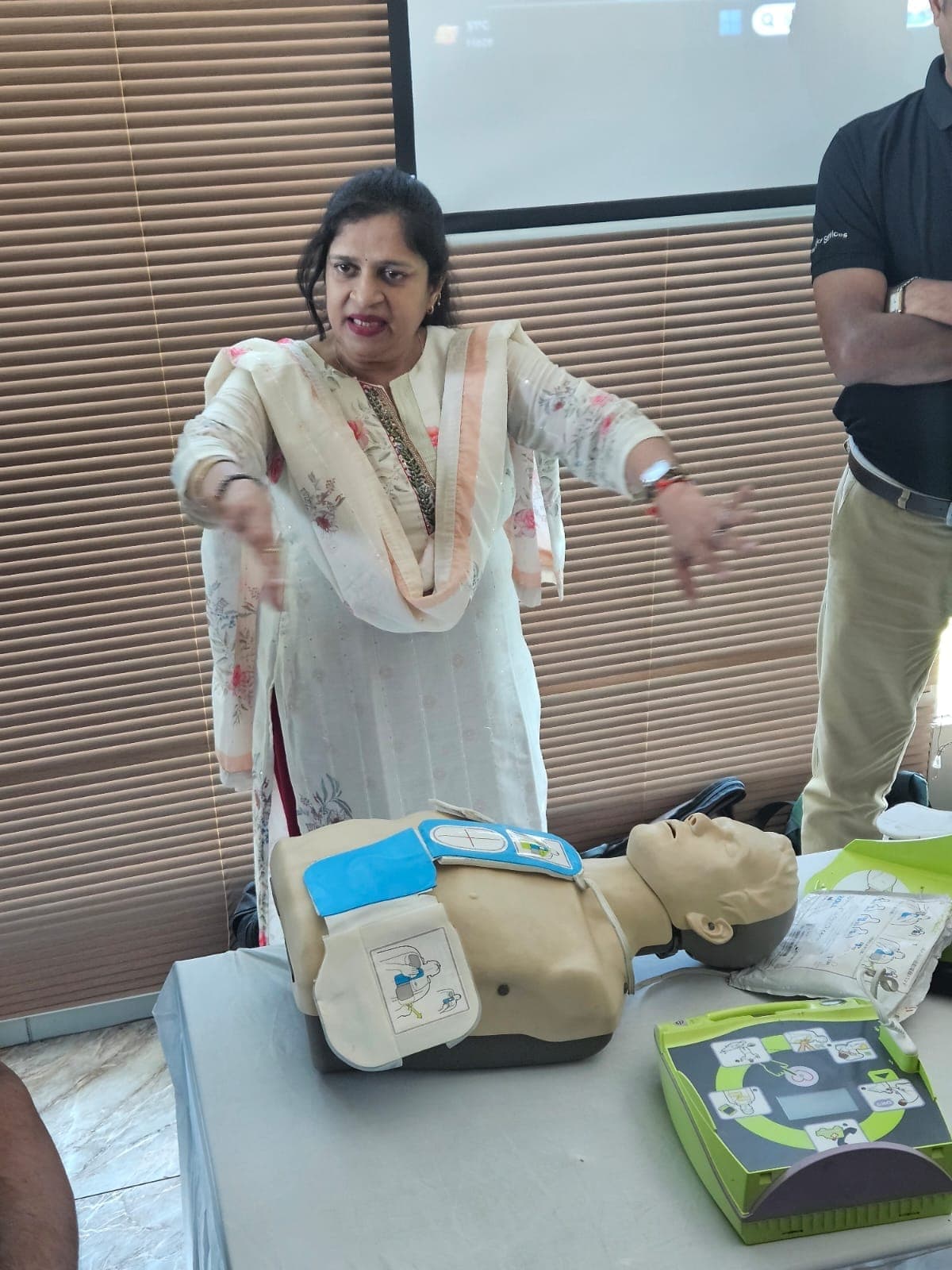
When someone's heart stops, every minute counts. CPR training teaches you to recognise a cardiac arrest, push hard and fast on the chest, give rescue breaths where appropriate, and use an automated external defibrillator (AED). These are the skills most likely to save a life in the first few minutes.
2. Responding to medical emergencies
Not every emergency is an injury. Trained first aiders learn to recognise and respond to:
- heart attack
- stroke
- breathing difficulties
- seizures
- diabetic emergencies
- fainting
Recognising these early, and knowing when to call 112, makes a real difference to the outcome.
3. Dealing with serious injuries
Accidents at work and at home can cause severe bleeding, fractures, and head or spinal injuries. Training covers how to control bleeding, how to support a suspected fracture, how to care for someone with a possible head or spinal injury without making it worse, and how to recognise and manage shock.
4. Coping with environmental emergencies
Heat, fire, electricity and water all bring their own dangers. First aid training covers heatstroke, burns, electric shock, drowning, and bites and stings, including what to do and, just as importantly, what not to do.
5. Practical injury management
Some of the most useful skills are hands-on techniques: applying bandages and dressings, improvising a splint, putting someone in the recovery position, and moving a casualty safely when it is necessary. These are learned by doing, not by reading.
Who should learn these skills?
Almost everyone. No medical background is needed, and you do not have to be especially strong or young to learn them. The skills are useful for:
- office staff and managers
- factory and site workers
- safety officers and supervisors
- security staff and drivers
- teachers, parents and students
How training builds confidence
Knowing what to do is only half of it; having the confidence to do it under pressure is the other half. Good training keeps explanations short and spends most of the time on practice: compressions on CPR manikins, using AED trainers, bandaging, and realistic scenarios that feel like the real thing. Trainers tailor the examples to the place you work, be it a plant, a site, an office or a classroom, so the skills feel relevant.
Keeping the skills sharp after the course
Skills fade if they are never used. A few habits help them stick:
- Run through the steps in your head now and then: check, call 112, compress, use the AED.
- Take part in workplace drills whenever they are held.
- Know where the first aid kit and the nearest AED are, at work and near home.
- Book refresher training before your certificate expires.
- Share what you learned with your family, so they know what to do too.
What employers gain
An employer whose staff have these skills gains more than compliance. Emergencies are handled faster and more calmly, injuries are less likely to become serious, and employees feel looked after. The same skills also travel home with your staff, where they may one day help their own families.
Choosing a course
Eduforce offers several routes to first aid certification, depending on your needs:
- First Aid with CPR, for workplace first aiders and emergency responders
- DISH Certified First Aid, for organisations that need training approved by the Directorate of Industrial Safety and Health, Government of Maharashtra
- First Aid and CPR Training to International Guidelines, based on current American Heart Association (AHA) guidelines
- GWO First Aid, for people working in wind energy
Training can take place at our training centre or at your own site. To find the right course, write to info@eduforce.in or message us on WhatsApp at 8779291591.
Be prepared. Be confident. Be the person who knows what to do.
In an emergency, call 112.
Related training
Need help developing workplace safety capability?
Talk to Eduforce about training, consultancy and safety solutions.
Eduforce Team
EHS Training & Safety Solutions
Practical safety guidance from the Eduforce trainers and consultants — written from the training centre, the classroom and the site.
More about Eduforce