"Certified first aider" is a phrase you will see on job descriptions, safety plans and site inductions. But what does certified first aid training actually involve, how is it different from a short awareness talk, and which course is right for you? This guide explains.
For an overview of training options in Mumbai, see our guide to first aid training in Mumbai.
What "certified" means
A certified first aid course ends with an assessment. Participants do not just attend; they show that they can carry out the key skills correctly, and they receive a certificate when they do. The certificate tells an employer, a regulator or a client that the holder has been trained and assessed against a defined standard.
That is the main difference from an awareness session. Awareness training builds understanding. Certified training builds skills that have been checked.
The main levels of training
Most first aid training falls into a few broad levels:
- Basic first aid. The foundation: assessing what has happened, keeping yourself safe, dealing with minor injuries and giving initial care until help arrives.
- Advanced first aid. For people who may face serious injuries and life-threatening situations, with more practical work, more equipment and more complex scenarios.
- CPR and AED. Focused on cardiac arrest: recognising it, giving chest compressions and rescue breaths, and using an automated external defibrillator.
- Emergency first aid. A practical focus on acting quickly and calmly when the situation is serious and time is short.
Many courses combine these. A first aid course with CPR, for example, covers the basics alongside resuscitation.
What you will learn
Content varies by level, but a good certified course will cover:
- how to approach an emergency safely and assess the casualty
- calling for help and giving clear information to 112
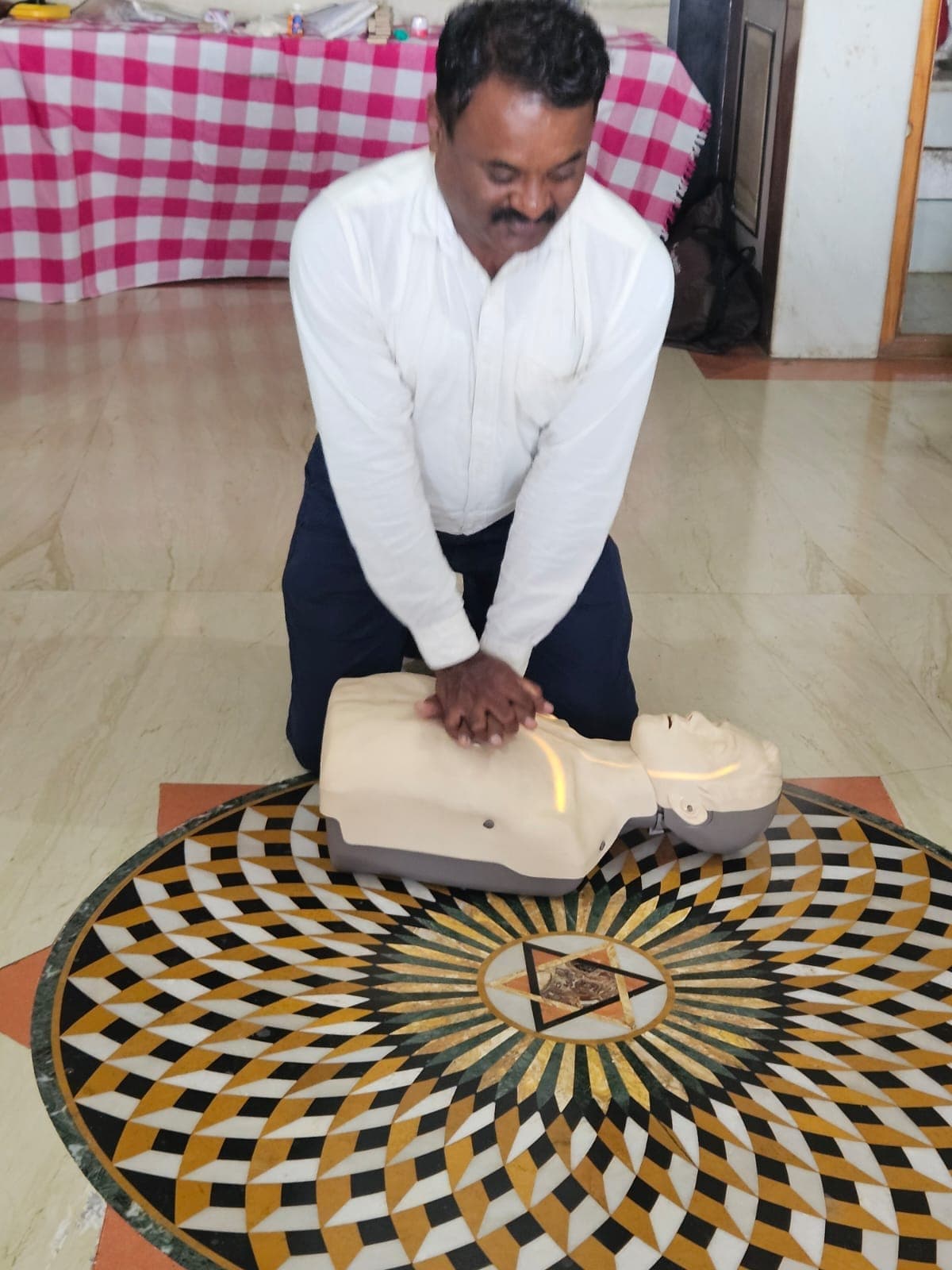
- CPR, including chest compressions and rescue breaths
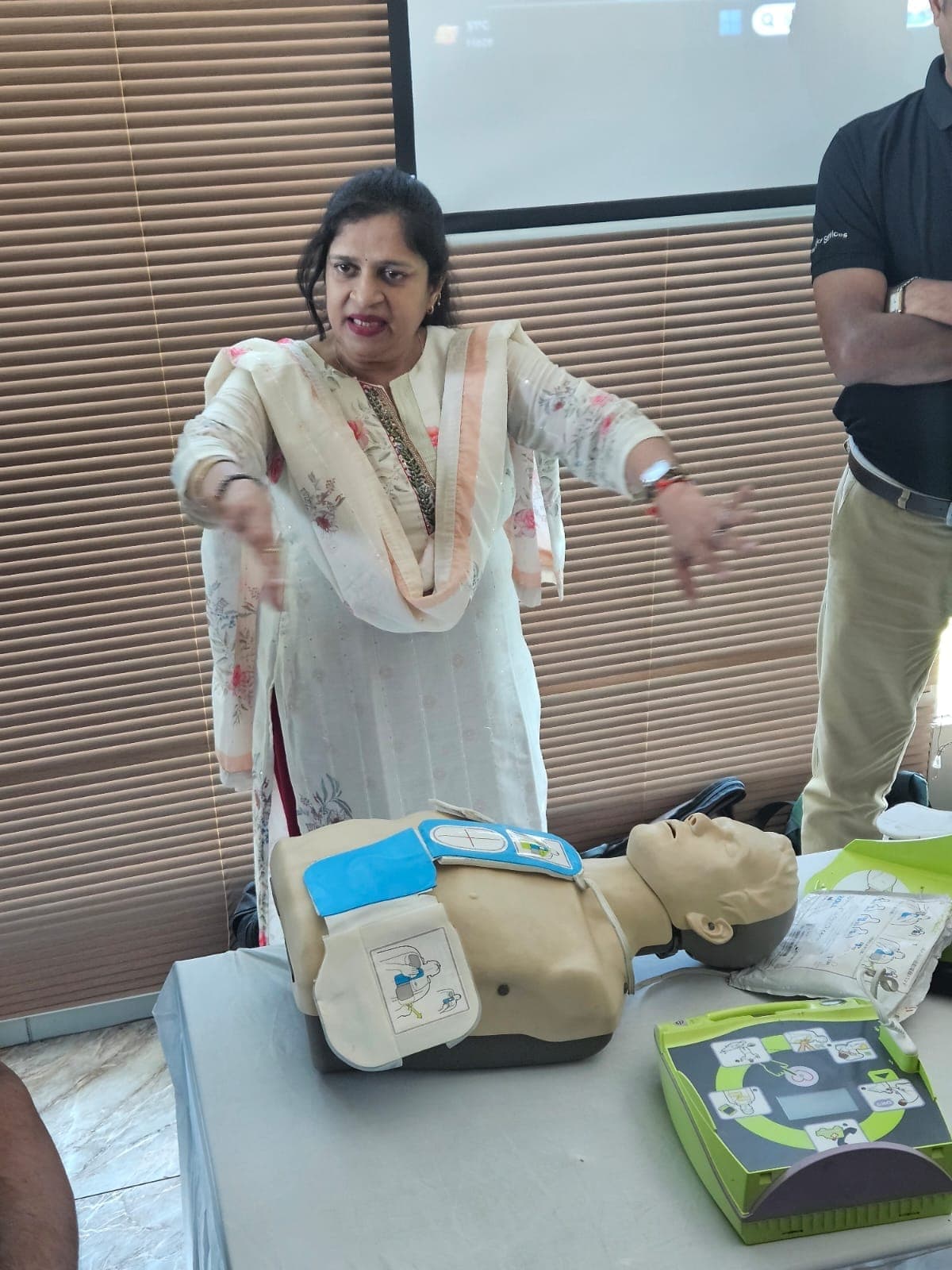
- how to use an AED
- controlling severe bleeding and recognising shock
- burns, fractures and head injuries
- medical emergencies such as heart attack, stroke, seizures and breathing difficulty
- placing someone in the recovery position
Why hands-on practice matters
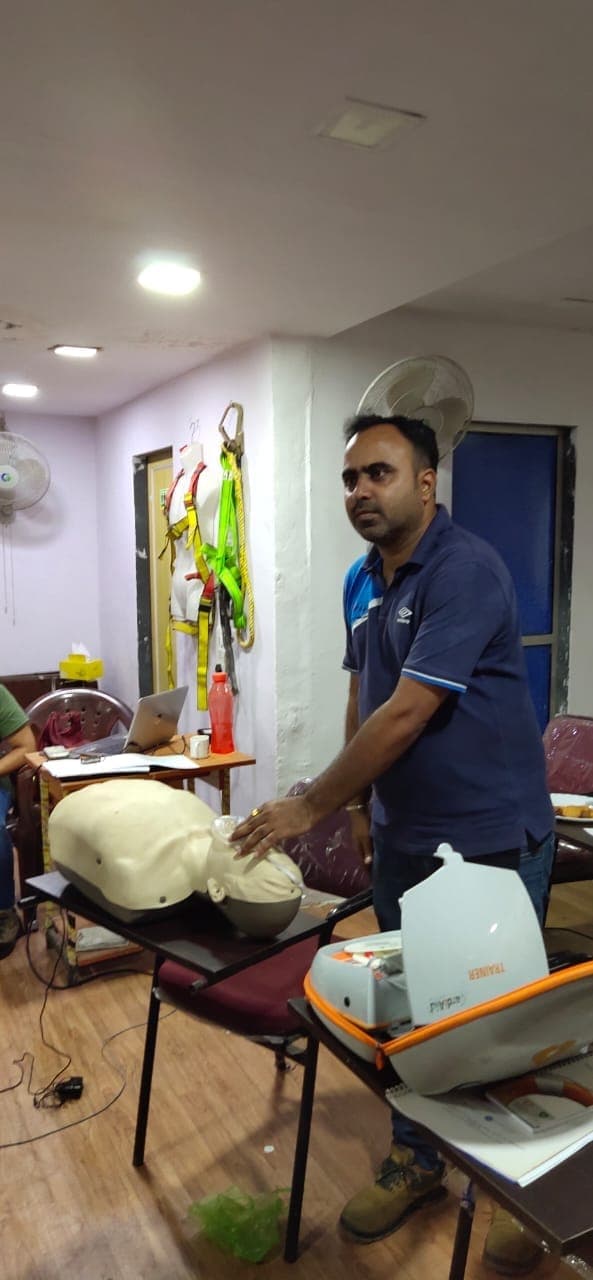
First aid is a practical skill. You can read about chest compressions, but you only learn how hard and fast to push by doing it on a manikin, with a trainer correcting your position. The same is true of bandaging, using an AED trainer and moving someone into the recovery position.
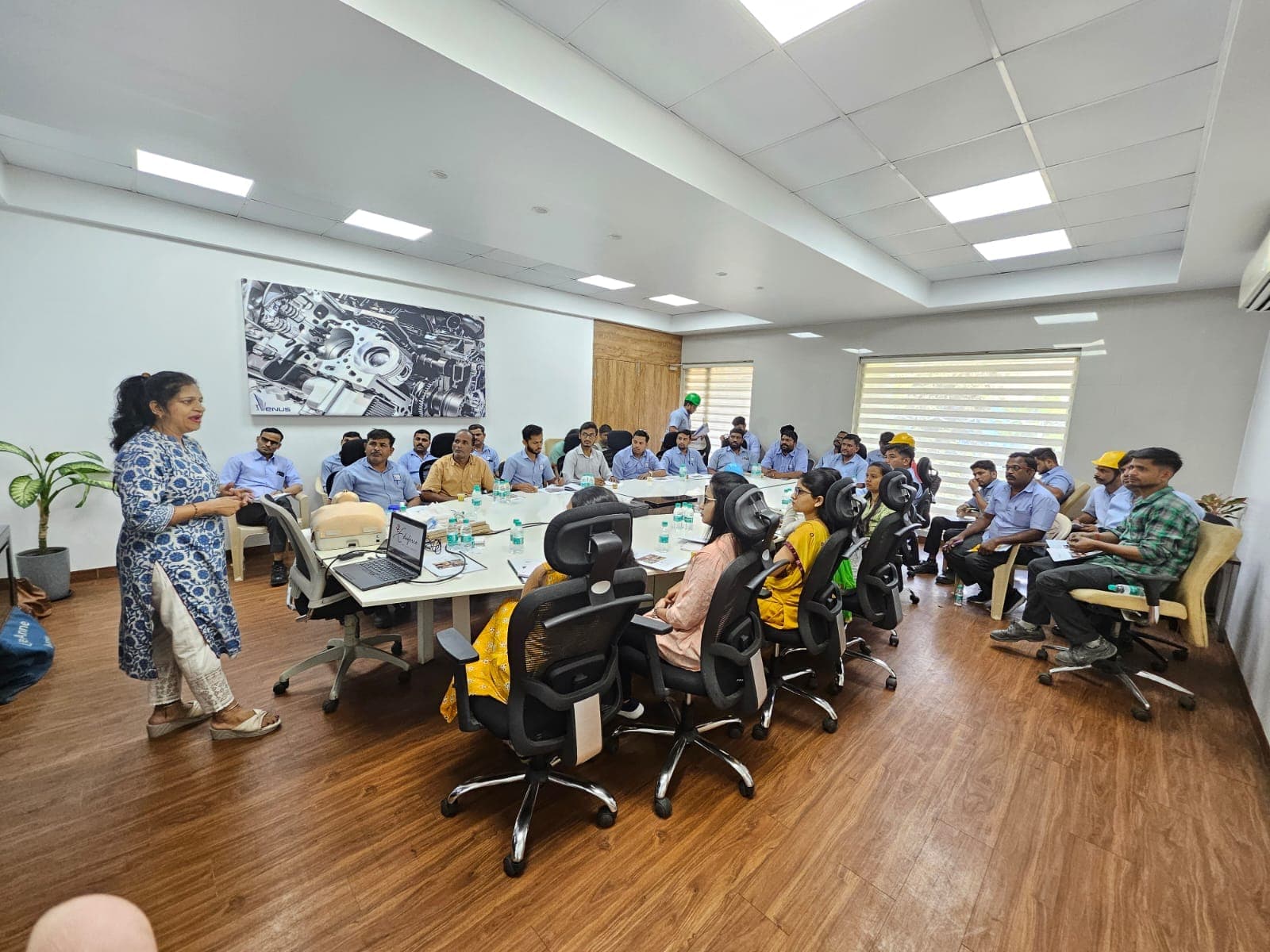
Good certified courses keep explanations short and spend most of the time on practice and realistic scenarios, so that the skills are still there when they are needed. Watching a video can help you revise, but it cannot replace practising with your own hands.
Choosing the right course
Ask yourself three questions:
- Why do I need it? Personal preparedness, a role as a workplace first aider, a regulatory requirement or a specialist industry each point to different courses.
- What risks will I face? A low-risk office calls for different skills from a factory, a construction site or a wind farm.
- Who recognises the certificate? Some employers and sectors require a specific certification, such as approval by the Directorate of Industrial Safety and Health (DISH) in Maharashtra, an American Heart Association course, or Global Wind Organisation (GWO) training for wind energy.
Questions to ask a training provider
- How much of the course is hands-on practice, and how many participants share each manikin?
- Who are the trainers, and what experience do they have?
- What certificate will I receive, who recognises it, and how long is it valid?
- Can the scenarios be adapted to my workplace?
Keeping your skills current
First aid skills fade if they are not used, and guidelines are updated from time to time. Check how long your certificate remains valid, and plan refresher training before it expires.
Certified first aid training at Eduforce
Eduforce offers a range of certified first aid courses:
- Basic First Aid Certification, a foundation programme combining theory with practical application
- Advanced First Aid Certification, for responders who may face severe injuries and life-threatening situations
- First Aid with CPR, for workplace first aiders and emergency responders
- Basic Life Support (BLS), for those who may need to manage a cardiac arrest
- DISH Certified First Aid, where DISH approval is required, and First Aid and CPR Training to International Guidelines, based on current American Heart Association (AHA) guidelines
To find the right course, write to info@eduforce.in or message us on WhatsApp at 8779291591.
In an emergency, call 112.
Related training
- First Aid, Health & MedicineBasic First Aid Certification TrainingView programme
- First Aid, Health & MedicineAdvanced First Aid Certification TrainingView programme
- First Aid, Health & MedicineFirst Aid with CPR TrainingView programme
- First Aid, Health & MedicineBasic Life Support (BLS) TrainingView programme
Need help developing workplace safety capability?
Talk to Eduforce about training, consultancy and safety solutions.
Eduforce Team
EHS Training & Safety Solutions
Practical safety guidance from the Eduforce trainers and consultants — written from the training centre, the classroom and the site.
More about Eduforce