Picture a normal working day. A colleague stands up from a meeting, takes a few steps and collapses. They are not responding and they are not breathing normally. An ambulance has been called, but it will take time to arrive. What happens in the next few minutes depends on one thing: whether anyone in the room knows CPR.
This article explains why every workplace needs staff trained in cardiopulmonary resuscitation (CPR), how many people to train, and what good training looks like. For an overview of first aid training options, see our guide to first aid training in Mumbai.
Why CPR cannot wait for the ambulance
When the heart stops, the brain is starved of oxygen within minutes. Doctors at AIIMS Delhi have said that the chance of survival falls by 7% to 10% for every minute that passes without CPR. In a busy city, an ambulance rarely arrives within that window.
CPR keeps blood flowing to the brain and other vital organs until professional help arrives, and an automated external defibrillator (AED) can restore a normal heart rhythm. Both depend on people who are already on the scene. In a workplace, those people are your employees.
What CPR training gives your staff
Good CPR training teaches people to:
- recognise cardiac arrest quickly, without wasting time
- call 112 and get help on the way
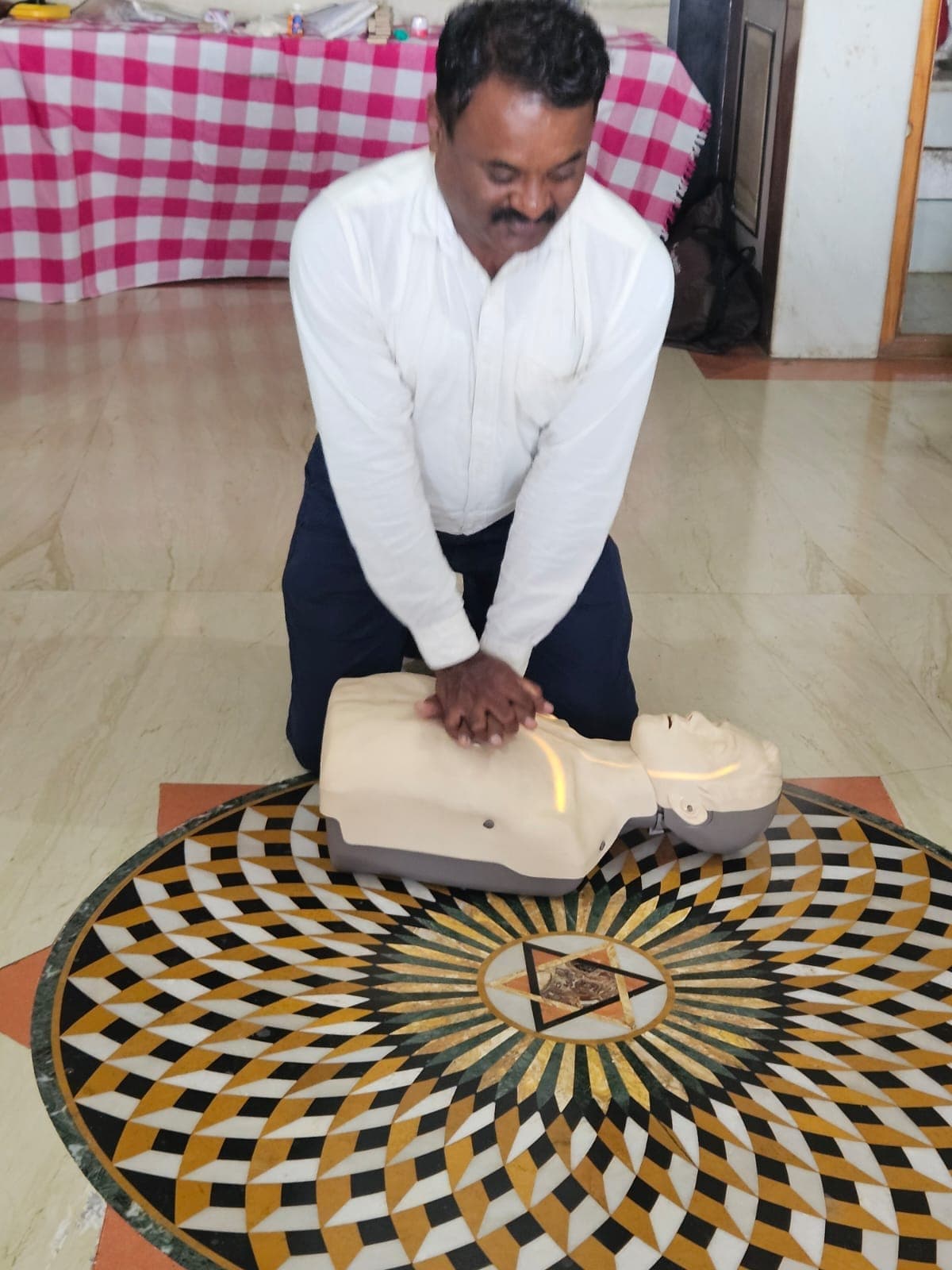
- give effective chest compressions, at the right depth and rate
- give rescue breaths where they have been trained to
- use an AED safely and confidently
- work as a team, swapping rescuers so compressions stay strong
Most CPR courses sit within wider first aid training, which also covers bleeding, burns, fractures and medical emergencies.
The benefits for the organisation
- Lives saved. Immediate CPR can be the difference between a colleague going home and not.
- Confidence in emergencies. Trained staff stay calmer and act faster in any incident, not just a cardiac arrest.
- Compliance. Many sectors and clients expect trained first aiders on site.
- A stronger safety culture. Training shows employees that the organisation takes their wellbeing seriously.
How many people should you train?
There is no single number that fits every workplace. Think about:
- every shift, including nights, weekends and holidays
- every building, floor or area of a large site, so that a trained person is always close by
- holidays, sickness and staff turnover, which can leave gaps
- higher-risk areas, such as workshops and production lines, which need more cover
A good rule of thumb is to train more people than the minimum, so that cover does not collapse when one person is away.
What good training looks like
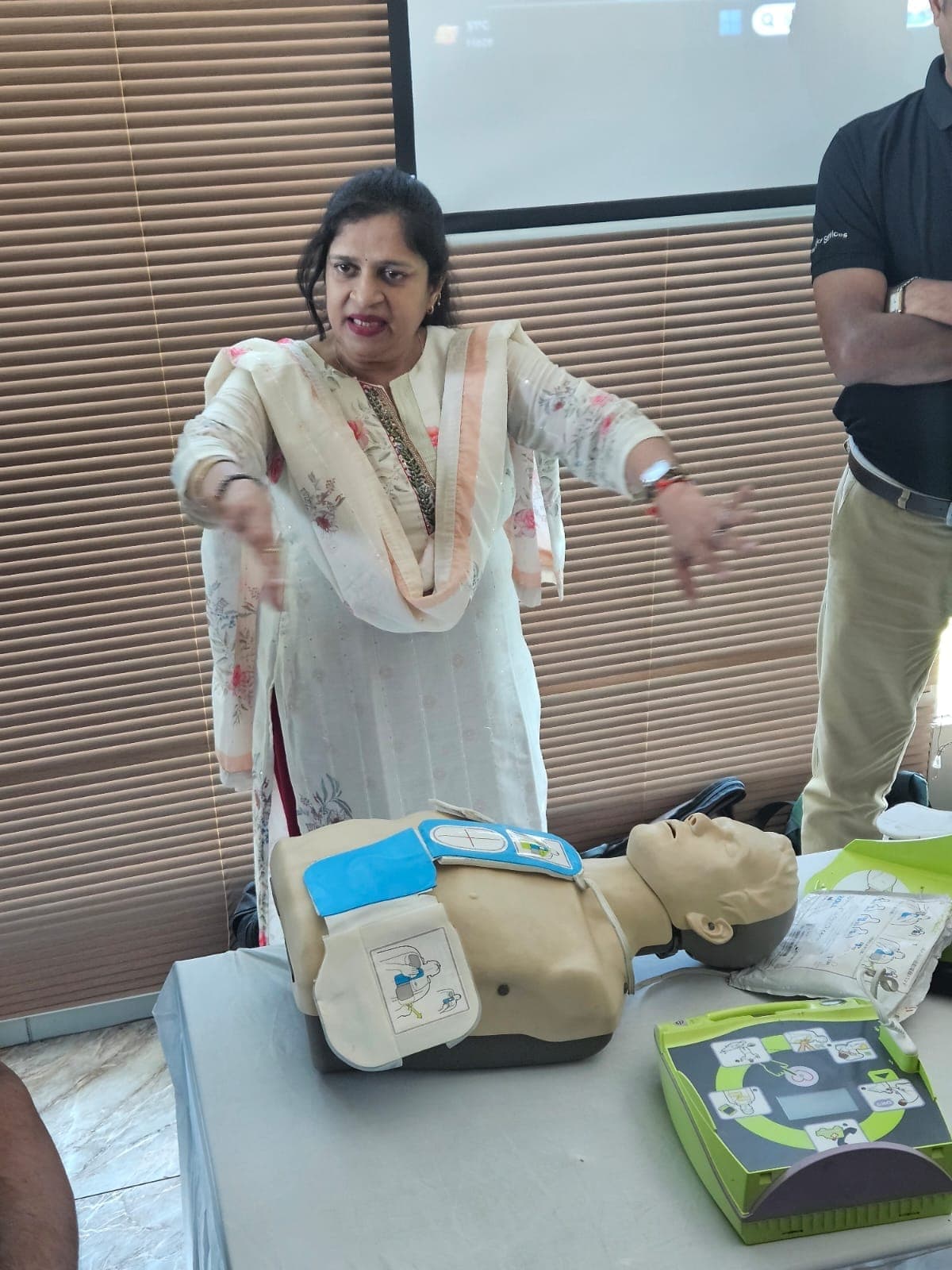
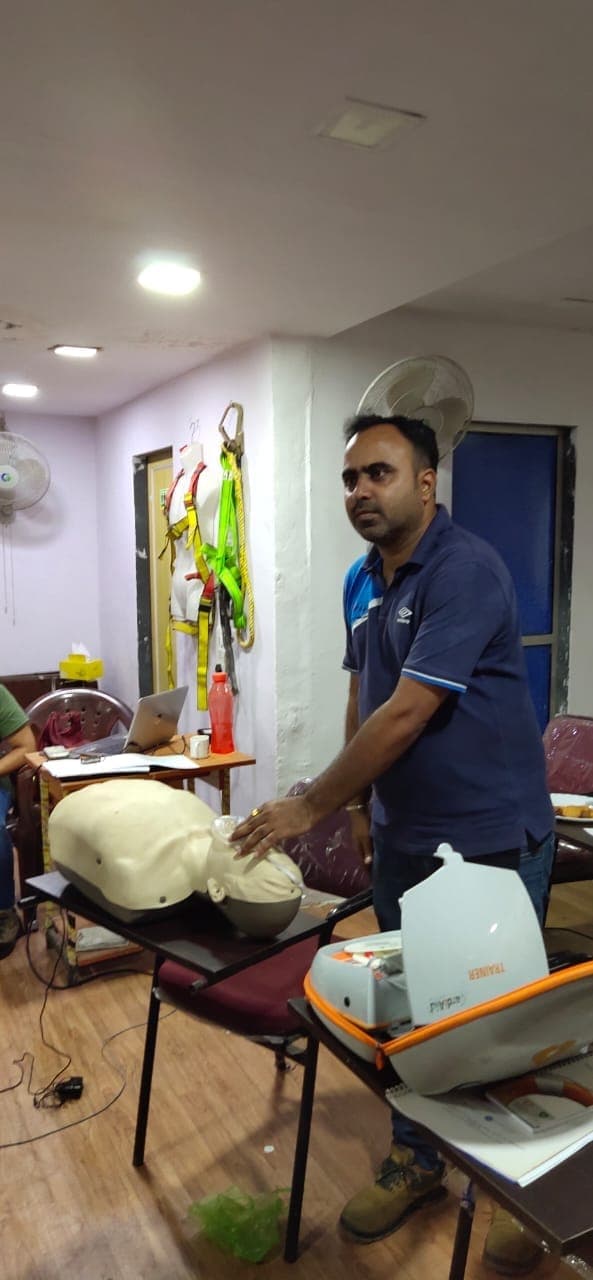
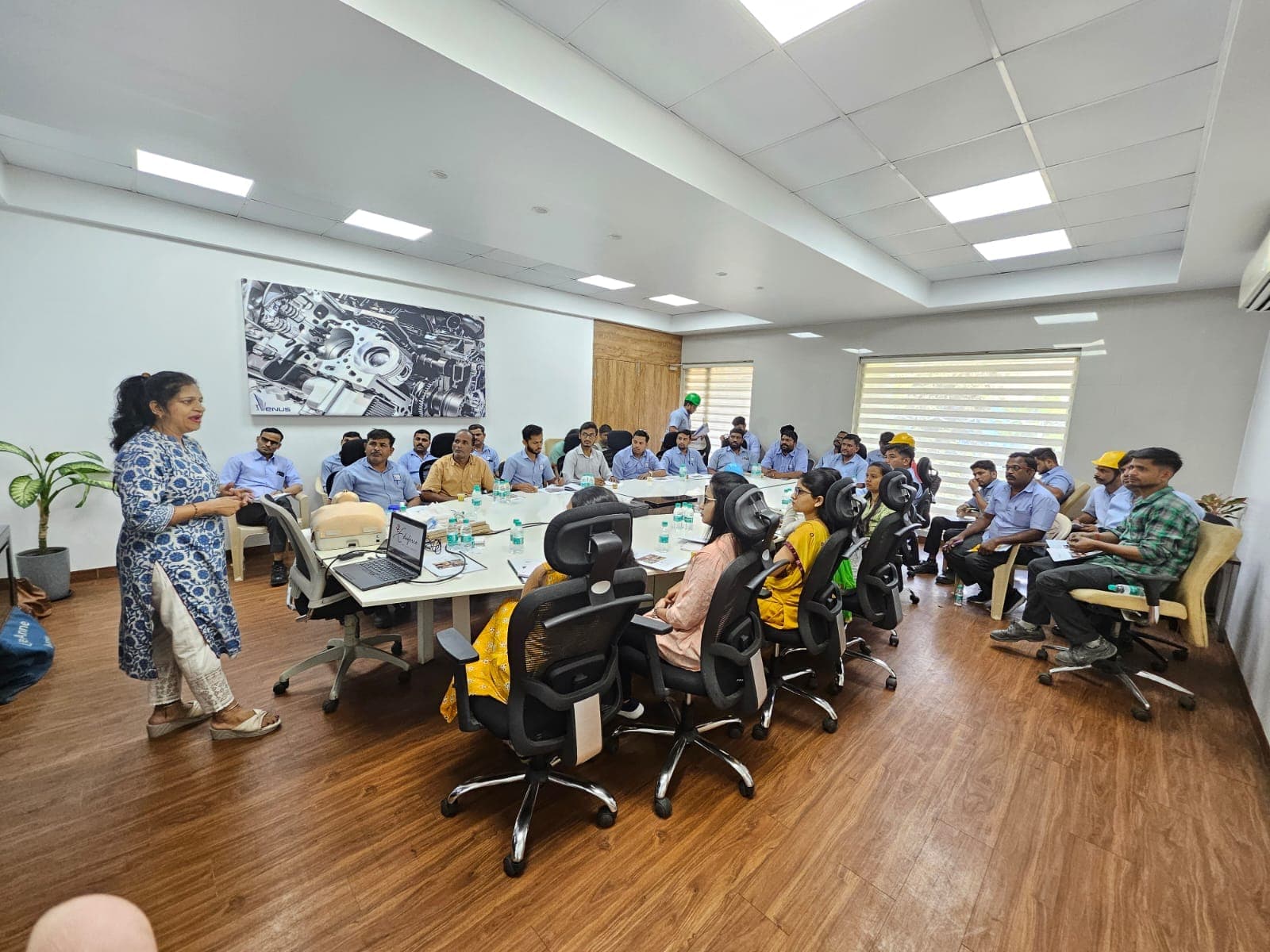
- Hands-on. Participants should spend most of the session practising on CPR manikins and AED trainers, not watching slides.
- Realistic. Scenarios should reflect your own workplace and the situations staff might actually face.
- Led by experienced trainers who correct technique and build confidence.
- Matched to the role. Basic training suits most staff; advanced first aid suits higher-risk environments.
- Refreshed regularly. CPR skills fade without practice, so plan refresher training before certificates expire.
Common worries, answered
"What if I do it wrong?" For someone in cardiac arrest, doing nothing is the worst option. Training gives you the technique, and even imperfect compressions are better than none until help arrives.
"I am not comfortable giving rescue breaths." Hands-only CPR, with chest compressions alone, is recommended for untrained bystanders and is far better than doing nothing. Training explains when rescue breaths help and how to give them safely.
"Will I remember it?" That is why practice and refresher training matter. Skills that are rehearsed regularly come back quickly under pressure.
Make the most of the training
- Put an AED where people can reach it quickly, and check it regularly.
- Display the names of trained first aiders and the location of the AED and first aid kits.
- Run short drills so that everyone knows who calls 112, who starts CPR and who fetches the AED.
How Eduforce can help
Our First Aid with CPR training prepares workplace responders to assess a casualty, act on life-threatening findings and hand over to professional help. For staff in higher-risk settings, our Advanced First Aid Certification and Basic Life Support (BLS) training go further. Training can take place at our training centre or at your own site.
To arrange CPR training for your staff, write to info@eduforce.in, call 7498845333 or message us on WhatsApp at 8779291591.
In an emergency, call 112.
Related training
Need help developing workplace safety capability?
Talk to Eduforce about training, consultancy and safety solutions.
Eduforce Team
EHS Training & Safety Solutions
Practical safety guidance from the Eduforce trainers and consultants — written from the training centre, the classroom and the site.
More about Eduforce