
A life saved at 30,000 feet
On a flight from Dehradun to Pune, a young passenger suffered a heart attack. A doctor from Pune's Sassoon Hospital, who happened to be on board, kept a cool head, gave him CPR and saved his life. Fellow passengers praised the doctor as a devdoot, an angel sent from heaven.
That doctor had medical training. But the skills that saved that young man's life are ones that anyone can learn. At work, at home or on the street, you could be the person who keeps someone alive until help arrives.
What is CPR?
CPR stands for cardiopulmonary resuscitation. When someone's heart or breathing stops, CPR keeps oxygen-rich blood moving to the brain and other vital organs until professional help, or a defibrillator, can take over. It combines chest compressions with rescue breaths.
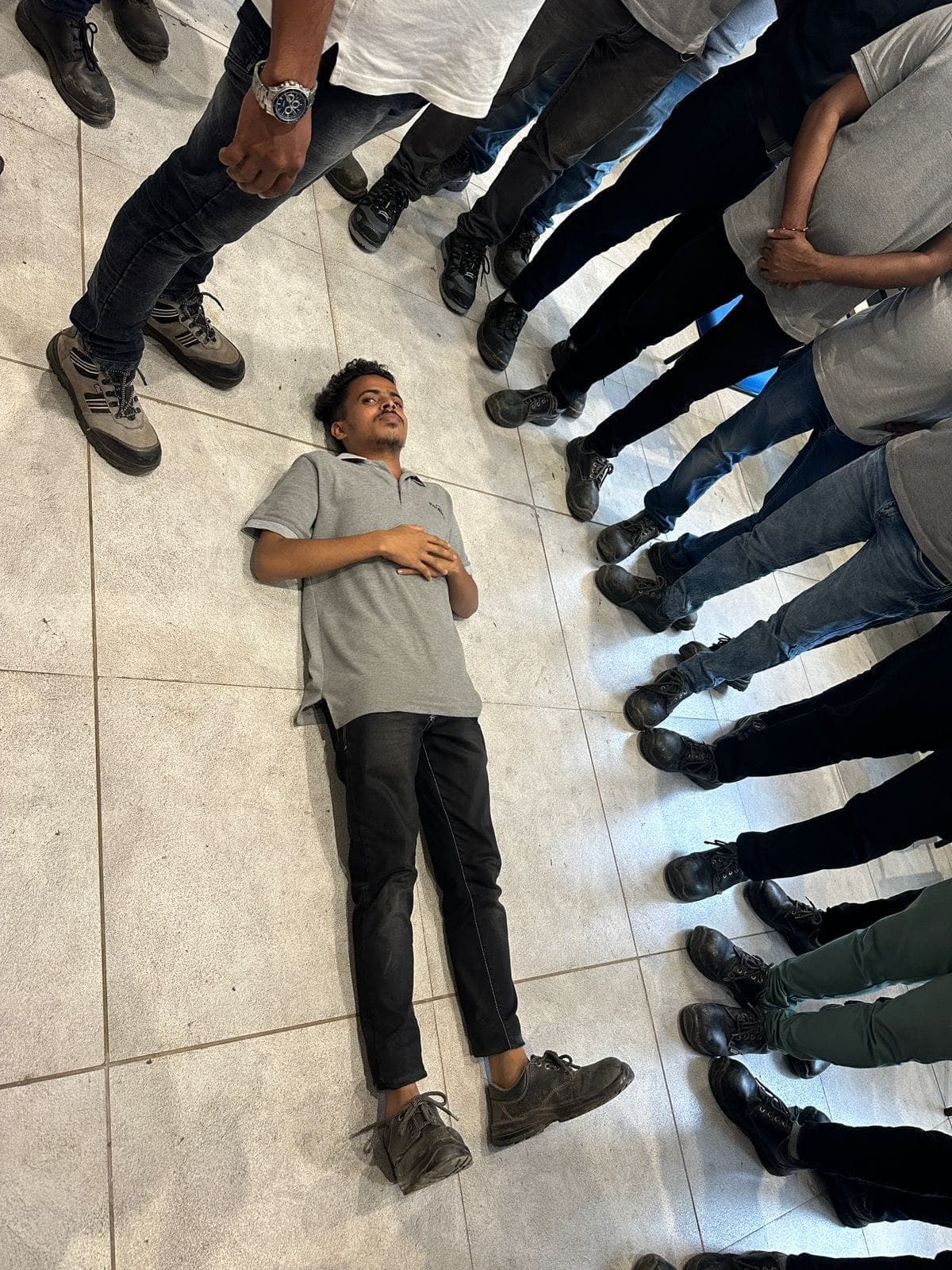
If someone collapses in front of you
- Check that it is safe to approach, then tap the person firmly on the shoulders and call out to them.
- If they do not respond and are not breathing normally, call 112 or ask someone nearby to call, and send someone to fetch an AED if there is one.
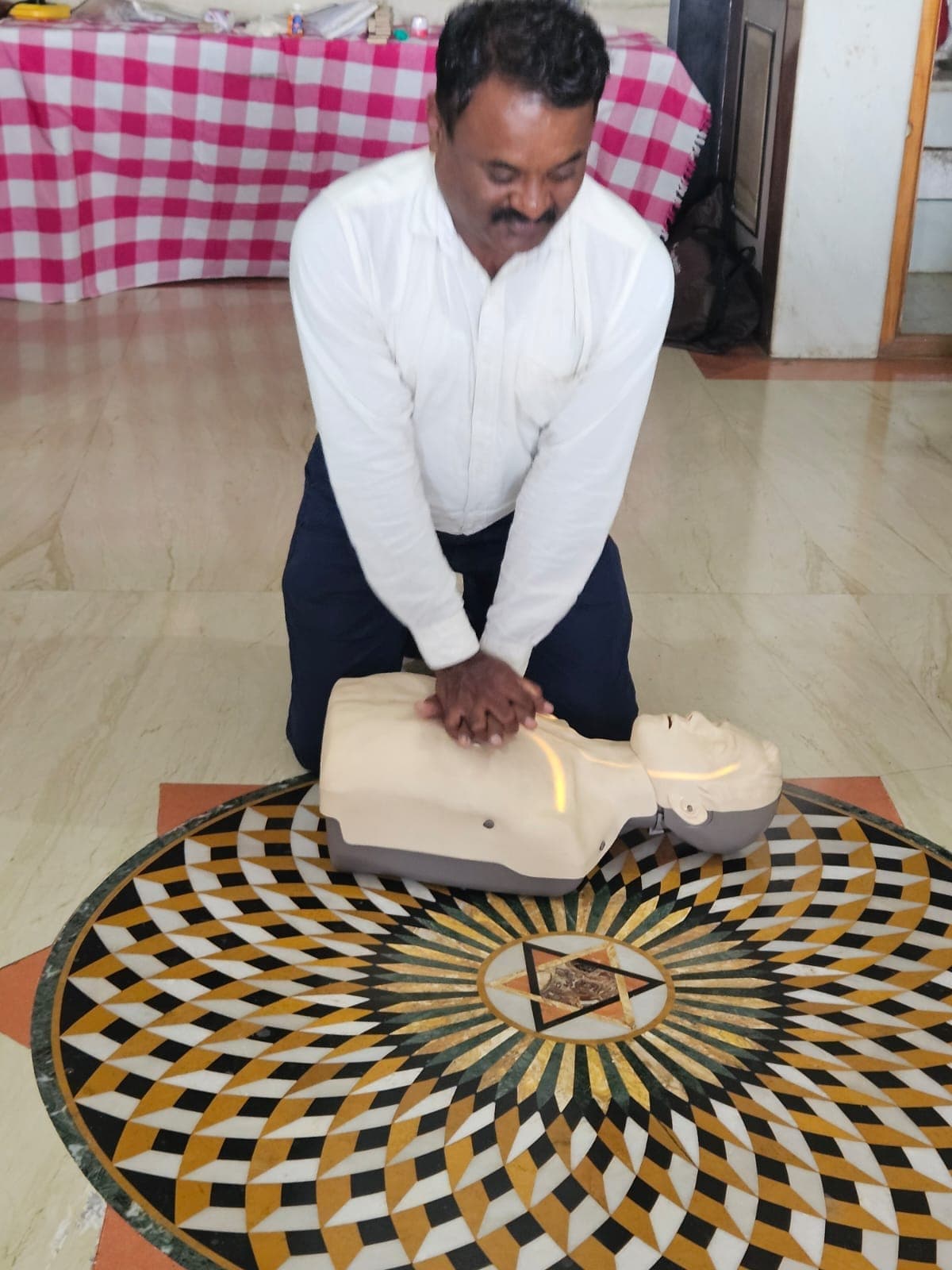
- Start chest compressions. Place the heel of one hand in the centre of the chest, put your other hand on top and keep your arms straight. Push hard and fast, about 100 to 120 times a minute.
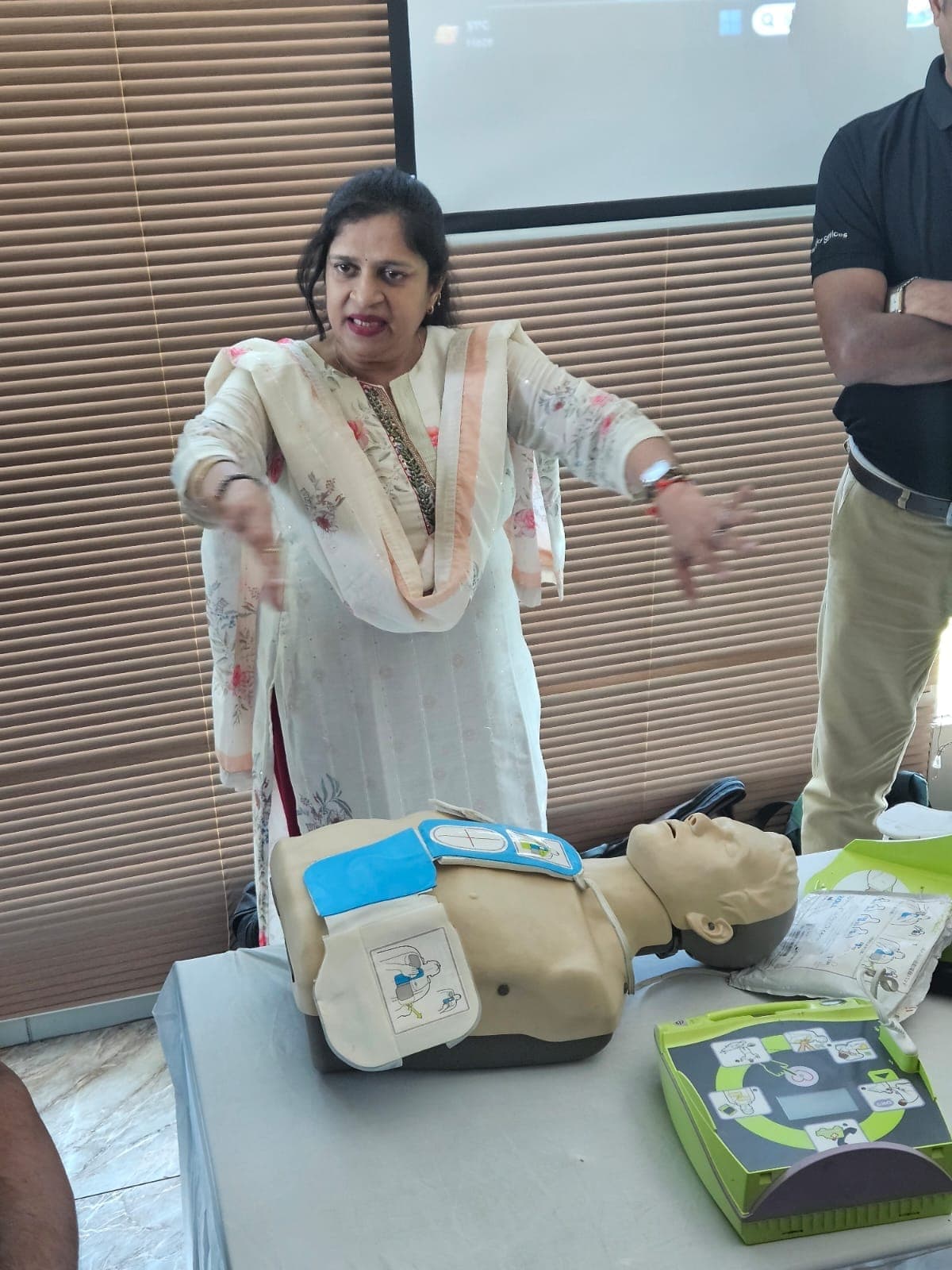
- Use the AED as soon as it arrives, and follow its spoken instructions.
- Keep going until professional help takes over or the person starts to breathe normally.
These steps are a reminder, not a replacement for training. Practising on a manikin is what gives you the confidence to act when it matters.
Four reasons to learn CPR and first aid
- You can save a life. In an emergency, knowing what to do, and doing it straight away, can decide whether someone survives.
- Your workplace becomes safer. When an organisation has staff trained in CPR, its response to emergencies is far more effective.
- You grow as a person. Being able to stay calm and take charge in a crisis builds confidence and leadership.
- It protects the people you love. Emergencies happen at home and among friends as often as at work.
Learning CPR is not difficult
CPR is a practical skill, best learned hands-on from qualified trainers, with practice on a manikin. Our programmes cover the essential life-saving skills:
For employers: building a team of devdoots
- Train people on every shift, not just in head office, so that someone trained is always nearby.
- Spread the skill across departments, including security, reception and supervisors.
- Refresh regularly, because confidence and technique fade without practice.
- Practise your emergency plan, so everyone knows who calls 112, who starts CPR and who fetches the first aid kit or AED.
Make the decision today
In a sudden emergency, the first few seconds count. Learn CPR, and you could be the devdoot for a colleague, a family member or a stranger.
Register for our CPR and first aid training today.
मराठीत: सीपीआर शिका, कुणासाठी तरी देवदूत व्हा
विमानातील एक प्रसंग: डेहराडूनहून पुण्याला येणाऱ्या विमानात एका तरुण प्रवाशाला हृदयविकाराचा झटका आला. त्याच विमानात असलेल्या पुण्याच्या ससून रुग्णालयातील एका डॉक्टरांनी शांतपणे परिस्थिती हाताळली, त्याला सीपीआर दिला आणि त्याचा जीव वाचवला. सहप्रवाशांनी त्या डॉक्टरांना "देवदूत" म्हटले.
सीपीआर म्हणजे काय? हृदय किंवा श्वास थांबल्यावर मेंदू आणि इतर महत्त्वाच्या अवयवांपर्यंत रक्त आणि प्राणवायू पोहोचत राहावा, यासाठी केली जाणारी जीवनरक्षक कृती म्हणजे सीपीआर. यात छातीवर दाब देणे आणि कृत्रिम श्वास देणे यांचा समावेश होतो.
कोणी अचानक कोसळल्यास: आधी परिसर सुरक्षित आहे ना ते पाहा आणि व्यक्तीला मोठ्याने हाक मारा. प्रतिसाद नसेल आणि श्वास नीट चालत नसेल, तर लगेच 112 वर फोन करा किंवा कुणाला तरी करायला सांगा. त्यानंतर छातीच्या मध्यभागी जोरात आणि वेगाने दाब द्यायला सुरुवात करा, आणि वैद्यकीय मदत येईपर्यंत थांबू नका. जवळ एईडी (AED) उपलब्ध असल्यास त्याच्या सूचनांचे पालन करा.
सीपीआर का शिकावे?
- संकटाच्या वेळी योग्य कृती करून तुम्ही एखाद्याचा जीव वाचवू शकता.
- प्रशिक्षित कर्मचारी असलेल्या संस्थेत आपत्कालीन परिस्थिती अधिक चांगल्या प्रकारे हाताळता येते.
- अशा प्रसंगी पुढाकार घेण्याची क्षमता तुमचा आत्मविश्वास आणि नेतृत्वगुण वाढवते.
- घरी, मित्रांमध्ये किंवा रस्त्यावर, कुठेही हे कौशल्य उपयोगी पडते.
सीपीआर शिकणे अवघड नाही. प्रशिक्षित प्रशिक्षकांकडून, मॅनिकिनवर प्रत्यक्ष सराव करून ते सहज शिकता येते. आजच निर्णय घ्या, सीपीआर शिका आणि गरजेच्या वेळी कुणासाठी तरी देवदूत व्हा.
Contact us / संपर्क: WhatsApp: 8779291591 Email: info@eduforce.in
This article is for general awareness and does not replace hands-on CPR training. In an emergency, call 112.
Related training
Need help developing workplace safety capability?
Talk to Eduforce about training, consultancy and safety solutions.
Eduforce Team
EHS Training & Safety Solutions
Practical safety guidance from the Eduforce trainers and consultants — written from the training centre, the classroom and the site.
More about Eduforce