A First Aid with CPR course is one of the most useful things you can do for your workplace, your family and yourself. In a short time, it teaches you how to respond to the emergencies you are most likely to meet, from a colleague collapsing to a deep cut or a burn. This article explains what the course covers, who it is for and how it works.
For an overview of first aid training options, see our guide to first aid training in Mumbai.
Who the course is for
No medical background is needed. The course suits:
- HR professionals and managers responsible for workplace safety
- safety officers and members of emergency response teams
- employees nominated as workplace first aiders
- individuals who want to be ready to help at work, at home or in public
What you will learn
The course is built around a clear sequence:
- Your role as a responder. What a workplace first aider is expected to do, and how to check that a scene is safe before stepping in.
- The first check. A structured primary survey that looks at the airway, then breathing, then circulation, so that nothing life-threatening is missed.
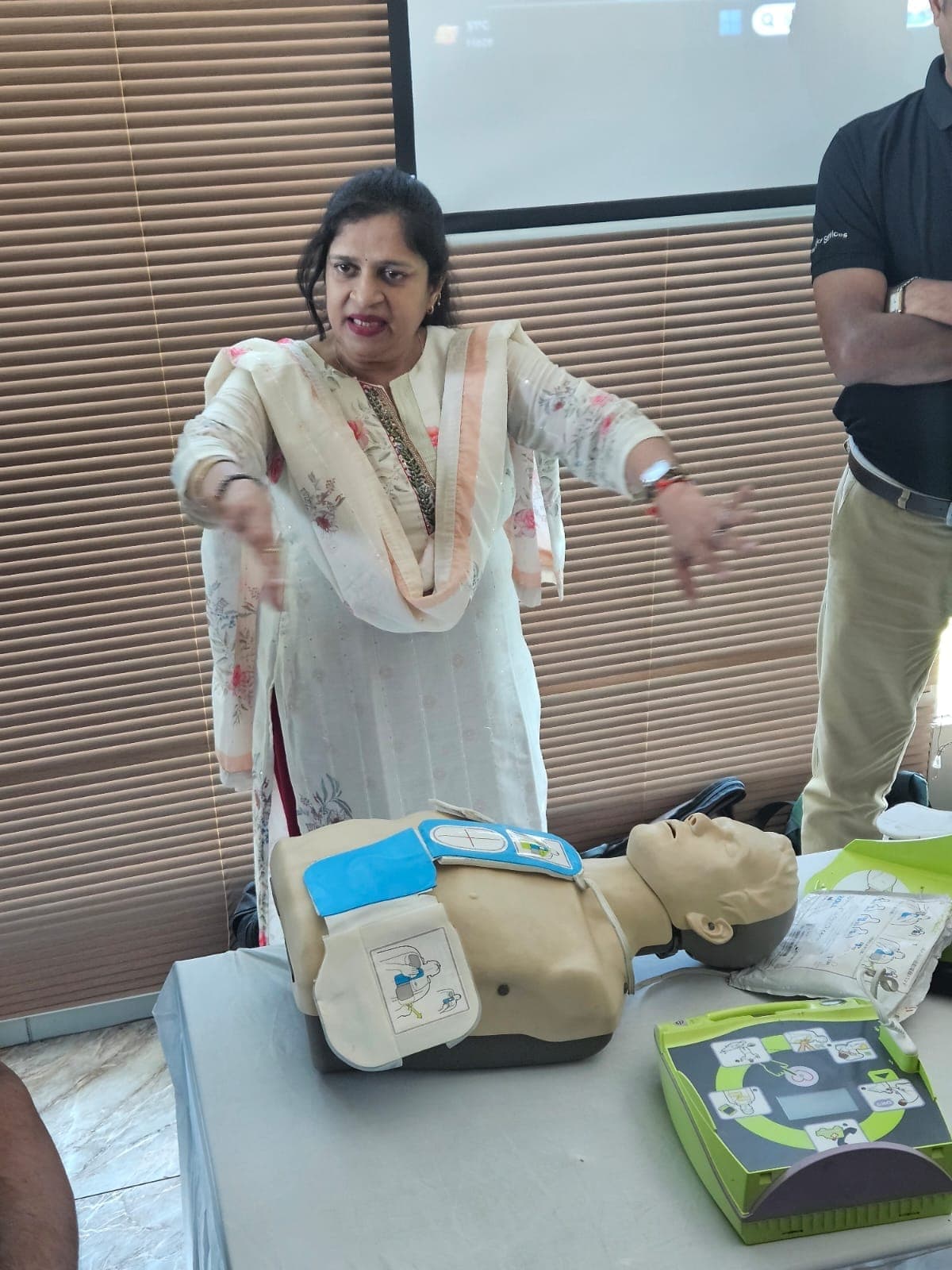
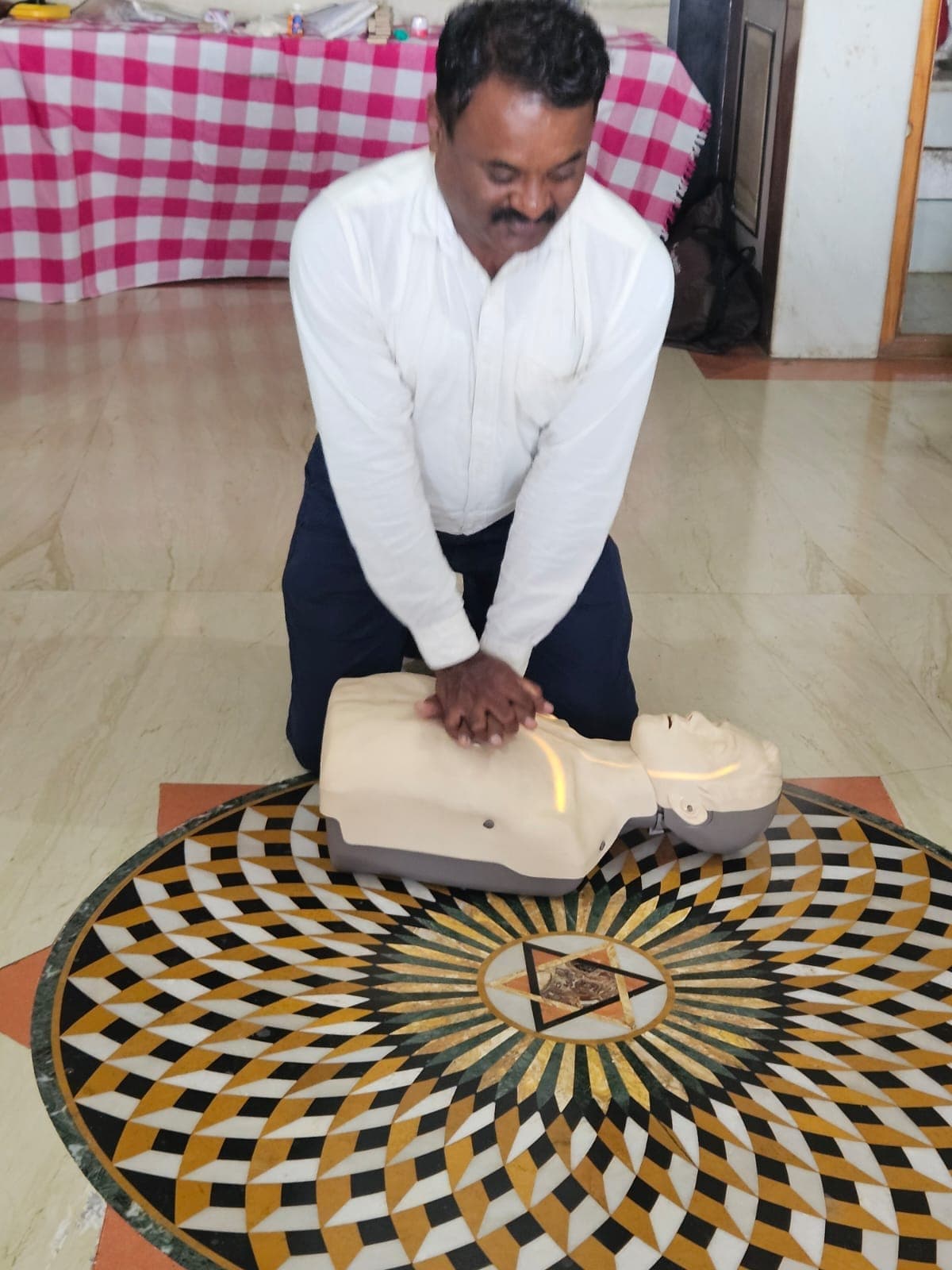
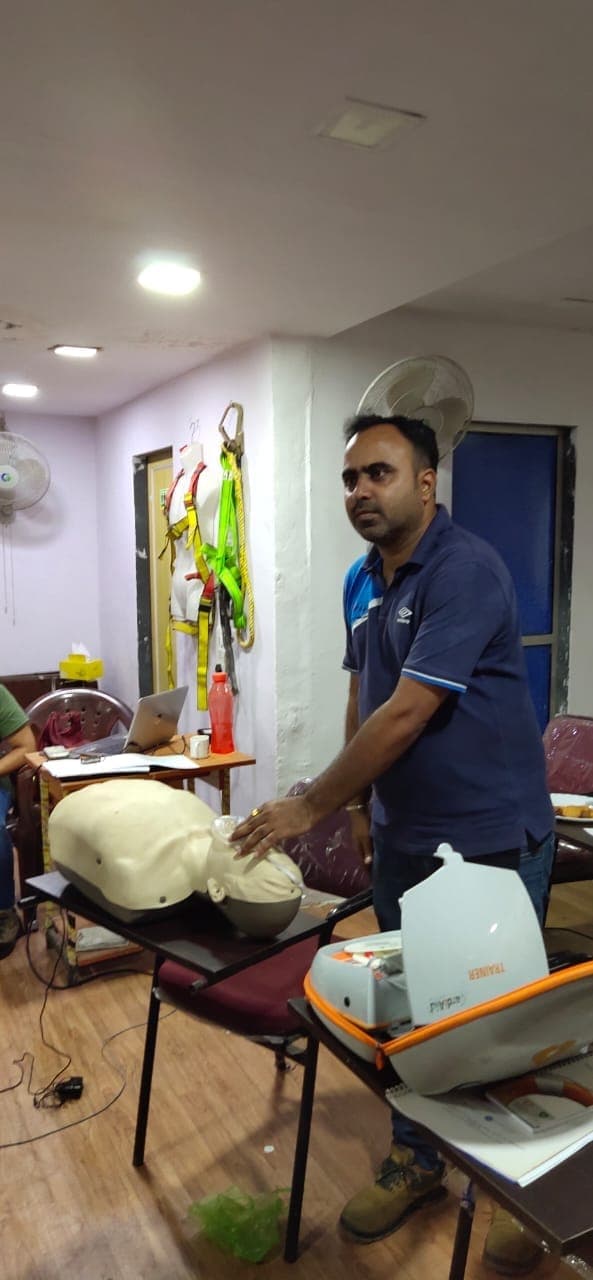
- Resuscitation. Recognising when someone's heart has stopped, giving CPR and attaching an AED, with plenty of time on training manikins.
- Serious injuries. Stopping heavy, life-threatening bleeding, and dealing with burns, broken bones and shock.
- Positioning and moving. Turning an unconscious person who is still breathing into the recovery position, and handling a casualty without causing further harm.
- Handing over. Giving the ambulance crew a clear account of what happened and what you have done.
Some first aid courses go further, into topics such as medical emergencies, choking and heat-related illness. If these matter for your workplace, check with the provider before you book.
How the course works
The course is practical and led by an instructor. Explanations are kept short and most of the time is spent doing: practising CPR, applying dressings, working in pairs and small groups, and running through realistic scenarios. The aim is for every participant to leave with skills they can actually use, not just knowledge.
Participants are assessed on the key skills, and those who pass receive an Eduforce certificate.
How the day usually flows
Most courses follow a similar path. They begin with keeping yourself safe and assessing a casualty, because everything else depends on that. CPR and the AED usually come early, while everyone is fresh, with plenty of time on the manikins. The course then moves through bleeding, burns, fractures and shock, and finishes with scenarios that bring the skills together, followed by the assessment. Questions are welcome throughout.
Why the practical part matters so much
In a real emergency, there is no time to look things up. What you do is what your hands remember. Practising compressions until the depth and rhythm feel natural, using an AED trainer until the steps are familiar, and rehearsing what to say when you call 112 are what turn knowledge into action.
What participants take away
- the confidence to step forward in an emergency instead of standing back
- a clear sequence to follow when someone collapses
- practical skills for the most common injuries and illnesses
- a certificate recognising the training
For employers: getting the most from the course
- Train enough people so that a first aider is present on every shift and in every area.
- Mix roles, including supervisors, security staff and reception, who are often first on the scene.
- Follow up with drills, so first aiders practise with the rest of the emergency team.
- Plan refreshers before certificates expire.
- Check equipment: first aid kits stocked and an AED available and maintained.
Before you attend
- Wear comfortable clothing, since you will kneel on the floor to practise CPR.
- Let the trainer know about any injuries or health conditions that might affect the practical work.
- Come ready to take part. The more you practise, the more you will remember.
Booking a course with Eduforce
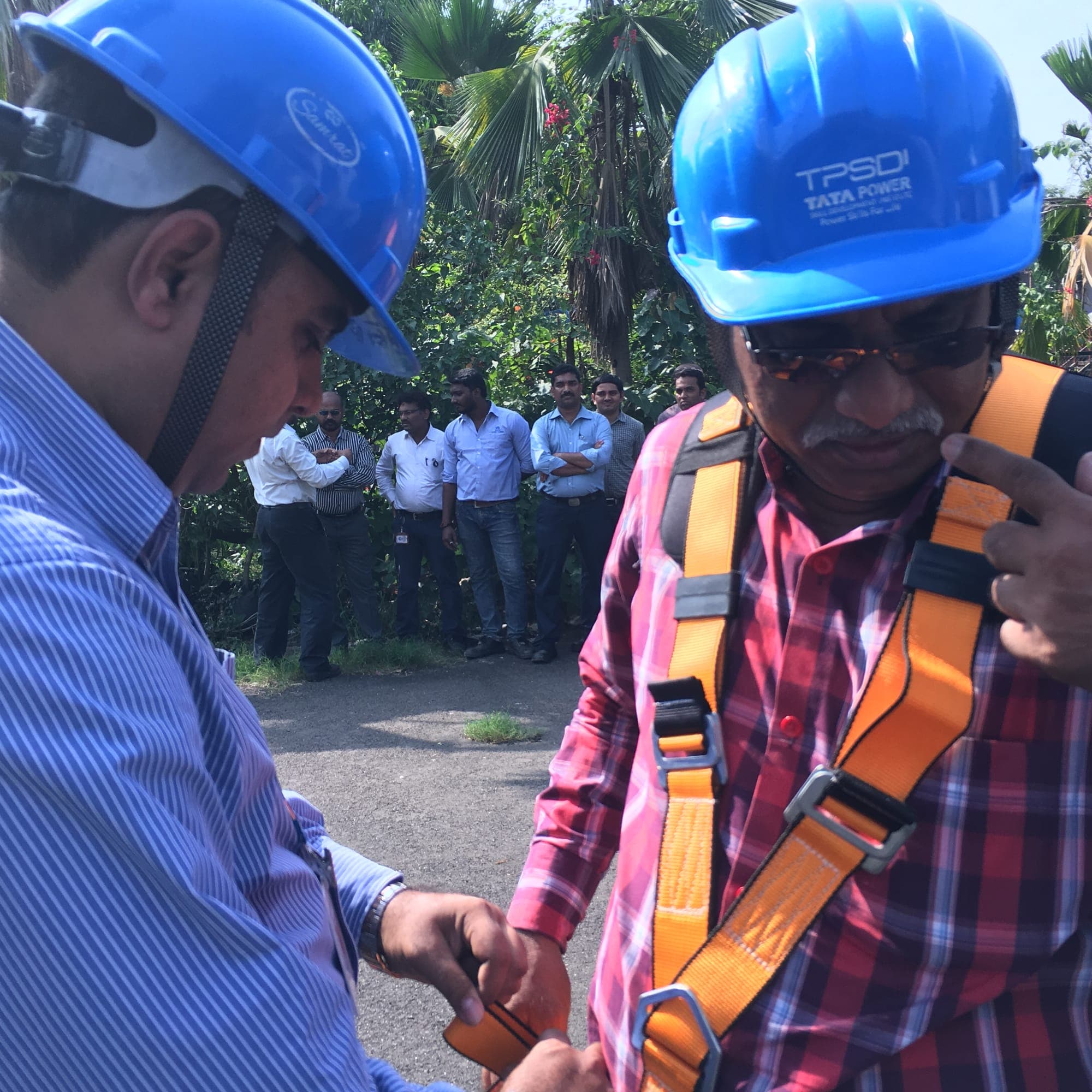
Our First Aid with CPR training prepares workplace responders to assess a casualty, act on life-threatening findings and hand over to professional help. Training can take place at our training centre or at your own site.
For upcoming dates or to arrange training for your team, write to info@eduforce.in, call 7498845111 or message us on WhatsApp at 8779291591.
In an emergency, call 112.
Related training
Need help developing workplace safety capability?
Talk to Eduforce about training, consultancy and safety solutions.
Eduforce Team
EHS Training & Safety Solutions
Practical safety guidance from the Eduforce trainers and consultants — written from the training centre, the classroom and the site.
More about Eduforce