A day to stop and check in
Every year on 10 October, the world marks World Mental Health Day. It is a reminder to give our minds the attention we usually save for our bodies, and to make that a daily habit rather than a once-a-year gesture.
When our minds are healthy, we think more clearly, handle our feelings better, get on better with the people around us and find more meaning in what we do. Even so, most of us would see a doctor about a sprained ankle long before we would talk to anyone about months of poor sleep or constant worry.
The World Federation for Mental Health has chosen "Lived Experiences Heard: Real Voices, Real Change" as the 2026 theme. The idea is to listen to people who have experienced mental health challenges themselves, and to let what they tell us shape how care and support are designed.
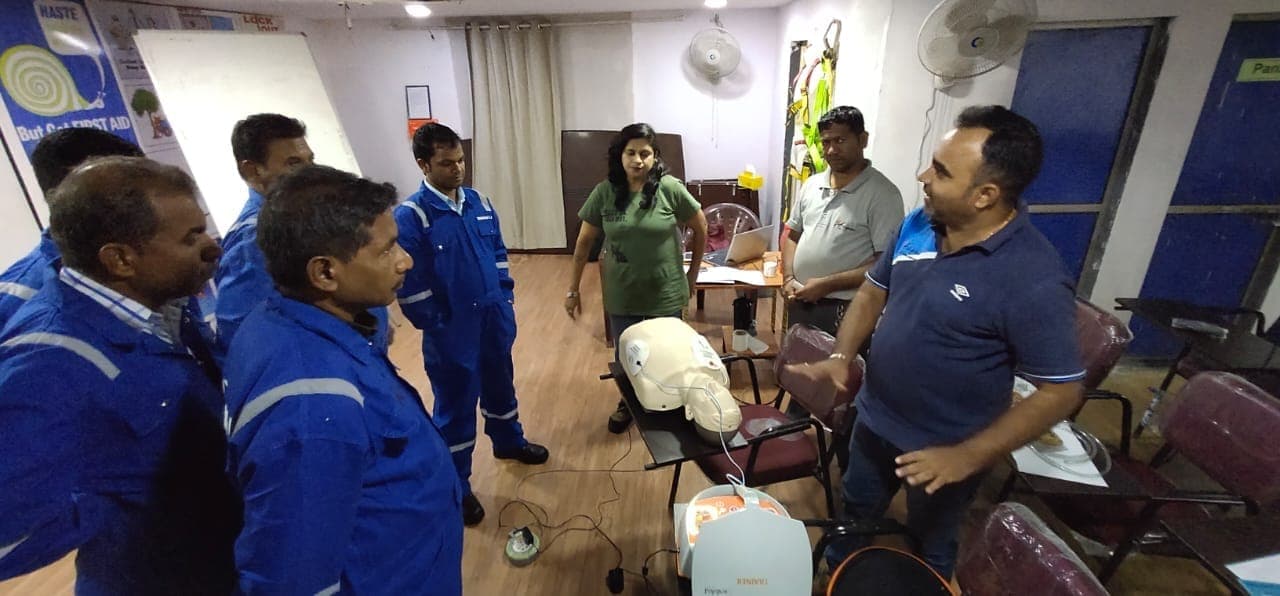
Our work at Eduforce is teaching people what to do when someone's body is in danger. When someone's mind is in danger, they deserve the same speed, the same care and no more embarrassment.
The scale of the problem
The World Health Organization reports that more than 1 billion people around the world are living with a mental health condition, and that anxiety and depression are among the biggest causes of long-term disability.
India's numbers, reported by The Week, are just as sobering:
- Roughly 10.6% of adults, about one in ten, have a mental health condition, according to the NIMHANS National Mental Health Survey.
- As many as 92% of those who need treatment do not get proper care.
- There are only around 0.75 psychiatrists for every 1 lakh people.
Stigma, a lack of awareness and too few professionals mean many people say nothing. That puts more weight on the support that families, friends, co-workers and teachers can give every day.
Six everyday habits that protect the mind
Mental health is not built in one big step. It grows out of small habits repeated daily. Here are six, each with an easy way to begin:
- Drink enough water. Your brain needs water as much as the rest of you. Being even slightly dehydrated can make you sluggish, unfocused and short-tempered. Keep water within reach at work and drink regularly.
- Be kind and smile. Warmth does good both ways, to the giver and the receiver. Thank someone at work, say something kind to a friend, or look in on a neighbour.
- Keep moving. A small amount of activity improves mood, reduces stress and raises energy. Try a ten-minute walk after lunch, or stand and stretch between meetings.
- Stay connected. Real conversations, people who back you up and a feeling of belonging all count. Get back in touch with someone you have lost touch with, or eat a meal with others and leave the phones aside.
- Pause and breathe. Stop for a moment and reset. When the day starts to feel heavy, breathe in slowly for a count of 4 and out for a count of 6, and repeat a few times.
- Make time for what you enjoy. Hobbies, creative work and small pleasures restore you. Keep some time each week for music, gardening, books, cooking or anything else that absorbs you.
Home and school
Wherever people spend their time, their mental wellbeing should be noticed, protected and taken seriously.
- Home: make talking about feelings an ordinary thing. Ask "How are you, really?" and then listen properly instead of jumping straight to solutions. Children pick up how to cope with stress from watching the adults in their lives.
- School: teachers often spot the first signs that a student is struggling, such as slipping marks, pulling away from friends or unexpected anger. Every student should have an adult they trust, and should learn that asking for help takes strength.
What employers and supervisors can do
Workplaces already plan for physical emergencies. The same thinking applies to mental health. A short checklist:
- Protect breaks and hours. Make regular breaks normal and keep working hours reasonable, especially during peak periods.
- Check in regularly. Ask managers and supervisors to have short, genuine conversations with their teams, not just about targets.
- Make it safe to speak up. A team where people can say "I'm struggling" without fear is stronger, not weaker. Leaders set this tone by how they respond.
- Put it in safety training. Mental health awareness deserves a place next to first aid and fire safety in workplace training.
- Display support numbers. Put the Tele-MANAS helpline and 112 on notice boards and in staff handbooks, next to your first aid contacts.
- Notice sustained pressure early. Long-running stress affects judgement and performance, which matters in safety-critical work.
Supporting someone who is having a hard time
You don't have to be a professional to help. Psychological first aid works like physical first aid: calm, practical support until expert help takes over. One widely used approach has three steps:
- Look. Watch for changes in people you know, such as pulling away from others, sleeping badly, losing interest in things they used to enjoy, or sounding hopeless. Check that they are safe and that their basic needs are being met.
- Listen. Choose a quiet time and ask how they are. Let them talk without judging, interrupting or rushing to fix things. Simple responses like "That sounds really hard" or "Thank you for telling me" help a lot.
- Link. Help them reach support, whether family, friends, a doctor, a counsellor or a helpline. Offer to make the call with them or go along to an appointment.
Some well-meant phrases do harm. "Just think positive" or "Others have it worse" can leave someone feeling dismissed and less likely to talk again.
When professional help is needed
Bad days are part of life. Contact a doctor or a mental health professional if:
- low mood, anxiety or stress goes on for longer than two weeks
- it starts to affect sleep, eating, work, study or relationships
- someone stops managing everyday tasks or cuts themselves off from everyone
- someone turns to alcohol or drugs to cope
- someone speaks about feeling hopeless, harming themselves or not wanting to live
If a person talks about ending their life, treat it as serious. Do not leave them alone, take away anything they could use to harm themselves, and get help immediately.
| Service | Number | Use it for |
|---|---|---|
| Tele-MANAS (Government of India) | 14416 or 1800-891-4416 | Free, round-the-clock help from trained counsellors and other mental health professionals |
| Emergency services | 112 | When a life is in immediate danger |
Tele-MANAS is free and open 24×7. Asking for help shows strength.
Healthy minds, happier lives
This World Mental Health Day, each of us can help build homes, workplaces and schools where mental wellbeing is looked after rather than brushed aside.
For us, being prepared means looking after the whole person, body and mind. Our Stress Management training helps employees recognise the signs of sustained pressure, understand how it affects decisions and performance, and take practical steps to reduce it. You can also browse our wider health, wellness and personal development programmes. To plan a session for your team, write to info@eduforce.in or message us on WhatsApp at 8779291591.
Look after your mind. Every plan you make starts there.
This article is for general awareness and is not a substitute for professional medical or mental health advice. If you or someone you know needs support, call Tele-MANAS on 14416. In an emergency, call 112.
Related training
Need help developing workplace safety capability?
Talk to Eduforce about training, consultancy and safety solutions.
Eduforce Team
EHS Training & Safety Solutions
Practical safety guidance from the Eduforce trainers and consultants — written from the training centre, the classroom and the site.
More about Eduforce