Parkinson's disease affects how people move. Over time it can bring tremor, stiffness, slowness and problems with balance. Medicines and physiotherapy remain the foundation of care, but there is growing interest in something less expected: music and dance.
In Mumbai, Jaslok Hospital has studied this idea in a clinical trial of music and dance therapy for people with Parkinson's. This article looks at what was reported, why these therapies are attracting attention, and what families, carers and workplaces can take from it.
What Parkinson's disease is
Parkinson's is a progressive neurological condition. It mainly affects movement, causing tremor, stiffness and slowness, and it can also affect balance, speech, sleep and mood. It develops gradually, and symptoms vary widely from person to person.
Treatment usually combines medication with physiotherapy and other support. Increasingly, doctors also recognise the value of a more rounded approach that looks after people's confidence, wellbeing and sense of connection, as well as their symptoms.
The Jaslok Hospital trial
The trial was registered with the Clinical Trials Registry of India (CTRI/2023/03/051064), and its protocol was published in JMIR Research Protocols in 2024. In April 2024, the hospital reported its results, which were covered by Medical Dialogues and other outlets.
According to those reports:
- 28 people with mild to moderate Parkinson's took part over six months.
- Participants in the therapy group chose either dance or music as their therapy, and the programme also included guided meditation.
- The principal investigator was Dr Paresh Doshi, Director of Neurosurgery at Jaslok Hospital.
- The hospital reported significant improvements in patients' quality of life and in measures of disease progression, as well as in caregivers' quality of life and burden. It also reported benefits for mood, memory, balance and anxiety.
These results were announced by the hospital rather than published as a full peer-reviewed paper, and the trial was small. The findings are encouraging, but larger and longer studies are needed before firm conclusions can be drawn.
Why music and movement may help
People with Parkinson's often find it hard to start or keep up a movement. A steady musical beat can act as a cue, helping some people to walk, turn or move more smoothly. Dance combines that rhythm with balance, coordination and gentle exercise, in a setting that feels enjoyable rather than clinical.
Around the world, similar programmes have grown in popularity, from group drumming to tango classes for people with Parkinson's. Researchers continue to study how much they help and for whom, but many participants value them for the joy and social contact they bring as well as for the movement.
A complement, not a replacement
Music and dance therapies are best seen as additions to medical care, not substitutes for it. Anyone with Parkinson's should talk to their doctor or physiotherapist before starting a new activity, and choose sessions led by people who understand the condition.
Safety at home and at work
Parkinson's can increase the risk of falls. Simple measures make a real difference:
- keep floors clear of clutter, loose rugs and trailing cables
- make sure stairs, corridors and bathrooms are well lit
- fit grab rails where they help, especially near steps and in bathrooms
- allow extra time, so nobody feels rushed
- know what to do if someone falls: check for injury, do not hurry them to get up, and call for help if they are hurt
Supporting colleagues and carers
Some people continue working after a Parkinson's diagnosis, and many employees care for a parent or partner with the condition. Employers can help with flexible hours, adjustments to workstations and tasks, and understanding when carers need time for appointments. Simple awareness among colleagues also helps people feel supported rather than isolated.
For families and carers
Living with Parkinson's affects the whole family. Carers can help by:
- encouraging regular activity the person enjoys, at a pace that suits them
- playing music they love, which can lift mood and help with movement
- joining in, so activities feel social rather than like exercises
- noticing changes in movement, mood, sleep or swallowing, and mentioning them to the doctor
- looking after their own health and rest, and asking for support when they need it
Looking ahead
The idea that music and dance can support people with Parkinson's is a hopeful one. It reflects a wider shift in health care towards treating the whole person. As research continues, these therapies may become a more regular part of Parkinson's care, alongside medicine and physiotherapy.
How Eduforce can help
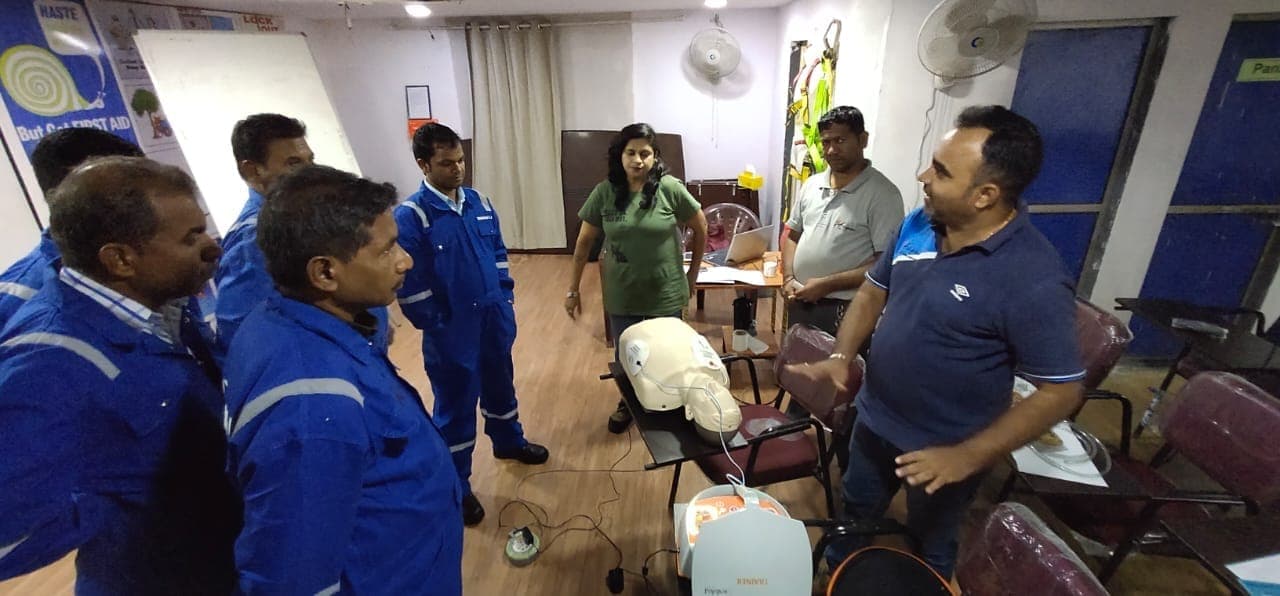
Our Basic First Aid Certification training prepares people to respond to falls and other common injuries, and our Yoga & Yoga Healer for Your Body programme supports physical strength, mental clarity and emotional balance. To arrange a session, write to info@eduforce.in or message us on WhatsApp at 8779291591.
This article is for general awareness and does not replace medical advice.
Related training
Need help developing workplace safety capability?
Talk to Eduforce about training, consultancy and safety solutions.

Eduforce Team
EHS Training & Safety Solutions
Practical safety guidance from the Eduforce trainers and consultants — written from the training centre, the classroom and the site.
More about Eduforce