Every year, on the second Saturday of September, World First Aid Day reminds people everywhere that first aid saves lives. In 2023 it fell on 9 September, and its theme was "First Aid in the Digital World", which focused on how digital tools such as apps and online learning can help people learn first aid. Learning is one half of being prepared. The other half is having the right supplies to hand when something happens at home.
This article is about the medical kit you keep for your family.
What to keep in your home kit
For cuts and wounds
- adhesive bandages (plasters) in a range of sizes, for small cuts and grazes
- sterile gauze pads and dressings, for larger wounds and to help control bleeding
- adhesive tape, to hold dressings in place
- antiseptic wipes or liquid to clean a wound before covering it
- cotton balls or swabs, for cleaning and for applying ointments
- a pair of scissors, for cutting tape, gauze or clothing
For protection and checking
- disposable gloves, to protect both you and the injured person
- a digital thermometer, which is accurate and safe to use with children
- a CPR face shield or pocket mask, for giving rescue breaths safely
For pain, swelling and burns
- over-the-counter pain relievers
- instant cold packs to bring down swelling after a bump or sprain
- burn gel or cream, for minor burns
For your family's own needs
- any prescription medicines that family members rely on
- a list of emergency numbers, including 112, your doctor and close family
- copies of identification, medical history and insurance details
Three basics for using the kit
Supplies only help if you know what to do with them. Three situations come up again and again at home:
- Bleeding. Put on gloves, press a sterile dressing firmly on the wound and keep the pressure on. If blood soaks through, add another dressing on top rather than removing the first. Call 112 if the bleeding is heavy or does not stop.
- A minor burn. Cool it under cool running water for 20 minutes, starting straight away. Remove rings or tight items nearby before swelling starts, then cover loosely with a clean, non-fluffy dressing. Do not use ice, butter or toothpaste.
- A sprain or bump. Wrap a cold pack in a cloth, never directly on the skin, and hold it on the injured area. Rest the injury and get it checked if the pain or swelling is severe.
Beyond the box
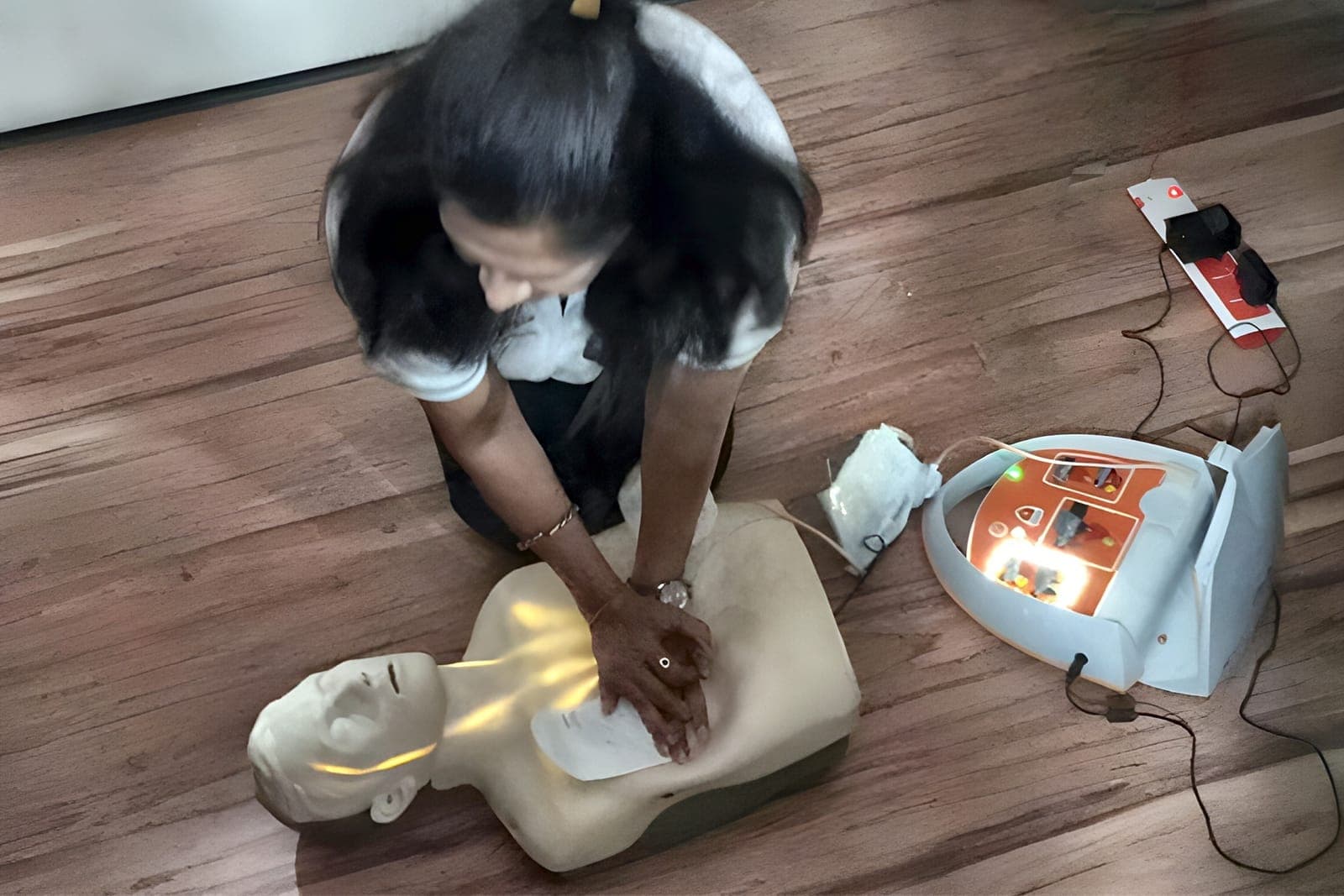
Know where the nearest defibrillator is. Automated external defibrillators (AEDs) can save lives in a cardiac arrest, but they are still uncommon in Indian homes and public places. Find out whether your housing society, office, gym or nearby mall has one, and support efforts to make them more widely available.
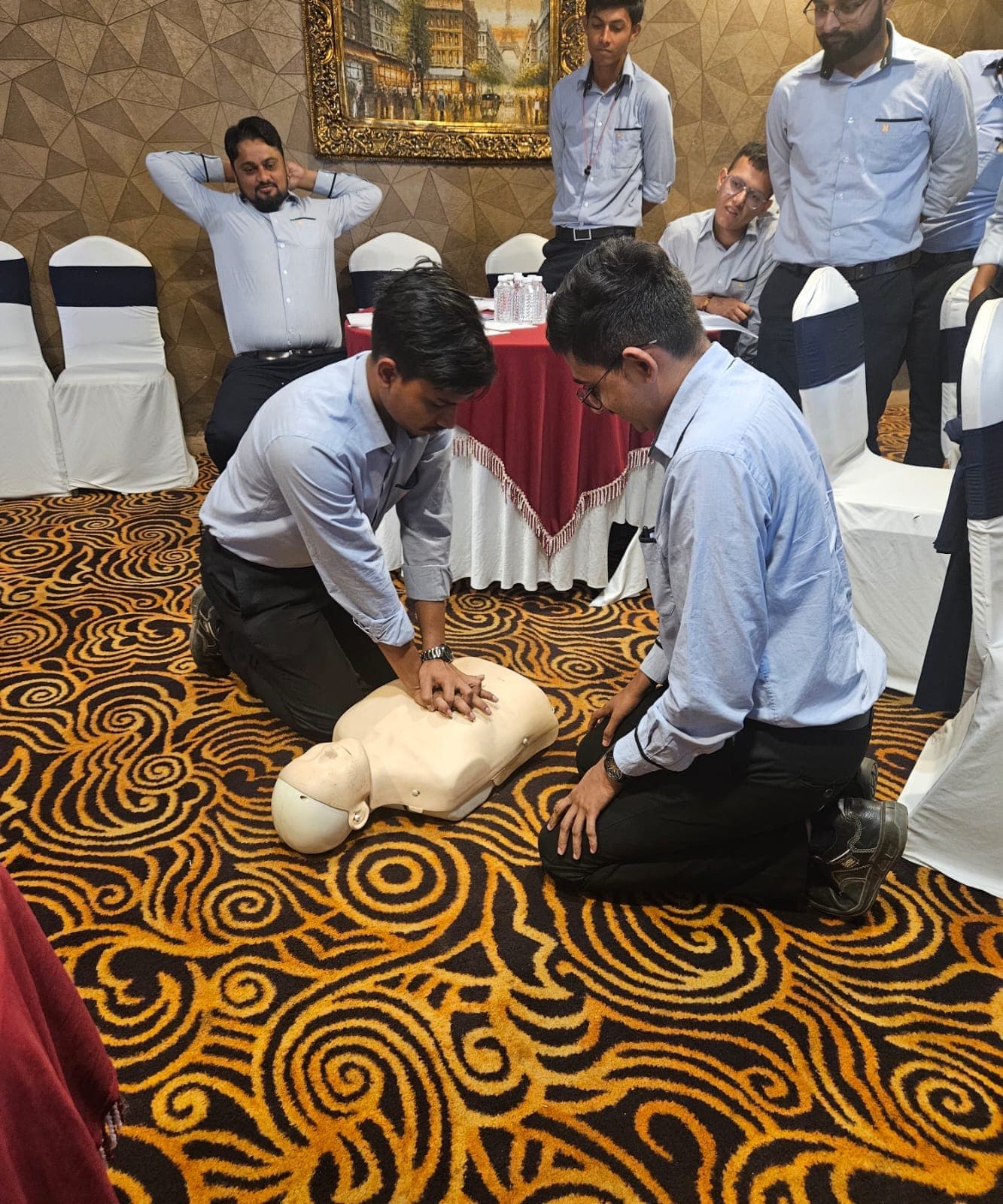
Learn CPR. A well-stocked kit is far more useful in trained hands. Wider CPR training, for every adult, would save lives in emergencies at home and in public.
Carry a medical alert card. A card in your wallet listing your medical conditions and medicines can give responders vital information if you cannot speak for yourself.
Keeping your kit ready
- Check it regularly, replacing anything used, damaged or past its expiry date.
- Make sure everyone at home knows where it is, including older children.
- Tailor it to your household, for example for young children, older relatives or anyone with a long-term condition.
- Keep a smaller kit in the car and in your travel bag.
Why it matters at work too
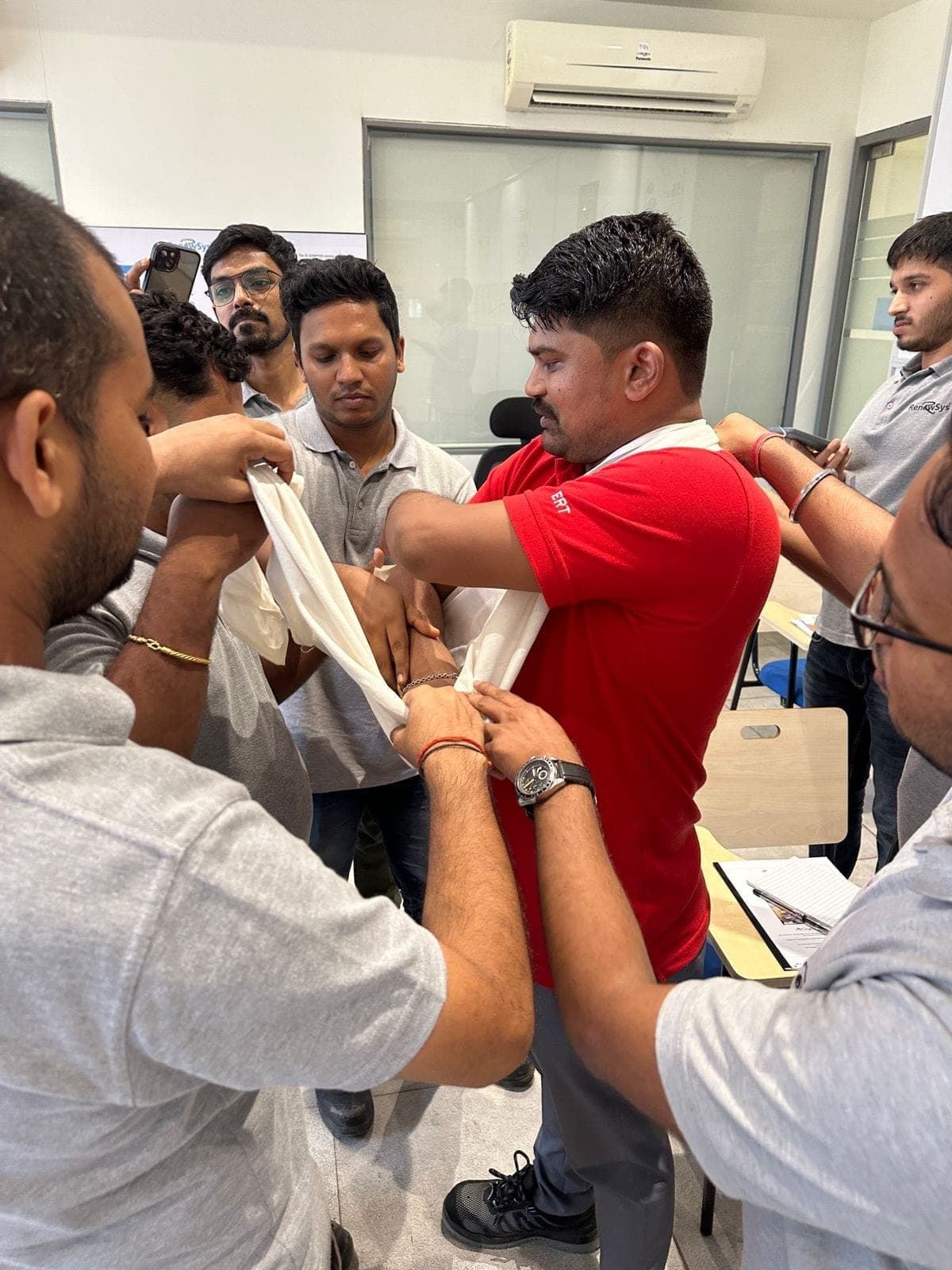
Many emergencies happen at home, and the person who responds is usually a family member. Employers who train their staff in first aid are also preparing them to help their own families. Encouraging employees to keep a home kit, and to know how to use it, extends the value of workplace training well beyond the site.
How Eduforce can help
Our Basic First Aid Certification training and First Aid with CPR training teach people how to use these supplies with confidence, at work and at home. To arrange a session, write to info@eduforce.in or message us on WhatsApp at 8779291591.
This article is for general awareness and does not replace first aid training or medical advice. In an emergency, call 112.
Related training
Need help developing workplace safety capability?
Talk to Eduforce about training, consultancy and safety solutions.

Eduforce Team
EHS Training & Safety Solutions
Practical safety guidance from the Eduforce trainers and consultants — written from the training centre, the classroom and the site.
More about Eduforce