"Sitting is the new smoking" is a catchy phrase, and like most catchy phrases it simplifies things. But it makes a fair point. For many people, most of the waking day is spent in a chair: at a desk, in a car, in meetings and then on the sofa in the evening. The body was not designed for that, and the World Health Organization has long counted physical inactivity among the leading risk factors for heart disease, stroke, type 2 diabetes and some cancers.
The good news is that you do not need a gym membership or a new lifestyle to start fixing it. You need to break up your sitting time, little and often. This article is a practical guide to doing exactly that. For the health effects of prolonged sitting, see what sitting all day does to your body.
Why little and often works
Long, unbroken periods of sitting are the problem, not sitting as such. Getting up regularly gets the leg muscles working, keeps blood flowing and changes the load on the back and neck. A few minutes on your feet every half hour adds up to a surprising amount of movement by the end of the day.
Eight easy ways to sit less
- Walk, do not message. If a colleague is in the same building, go and talk to them instead of sending a chat message or email.
- Drink more water. You will feel better for it, and every refill and trip to the washroom gets you on your feet.
- Stand for calls. Make standing up a habit for phone calls and online meetings, at least for part of each one.
- Set a 30-minute reminder. When it goes off, stand up, stretch or walk for a minute or two.
- Leave your desk for lunch. A change of scene refreshes the mind as well as the body.
- Choose the stairs over the lift whenever you can.
- Move the bin. Put your waste bin, printer or water bottle a short walk away so that small trips are built into the day.
- Cut evening screen time. Long hours of sitting at work are often followed by more sitting in front of a screen at home. Swap some of it for a walk.
Do standing desks help?
Sit-stand desks, which can be raised and lowered, make it easy to change position through the day. In a study published in 2016 by researchers from Texas A&M University, call-centre workers with sit-stand desks were about 46% more productive, measured by successful calls per hour, than colleagues who sat throughout, over six months. Around three-quarters of those using the sit-stand desks also reported less body discomfort.
That result came from one workplace doing one kind of work, so it should not be read as a promise for every office. But it supports a simple idea: people who can change position easily tend to feel more comfortable and work better.
One word of caution: standing still all day is not the answer either. Long periods of standing bring their own aches in the legs, feet and back. The aim is variety: sit, stand and move, and keep changing.
What employers can do
Individual habits matter, but the working environment decides how easy they are. Employers can:
- make movement normal, so nobody feels awkward standing at their desk or walking during a call
- hold some meetings standing or walking, especially short ones
- offer sit-stand options where they suit the work, and show people how to adjust them
- design the office for small walks, with printers, water points and meeting spaces a short distance from desks
- encourage real breaks, including leaving the desk at lunchtime
- include ergonomics in safety training, so people understand why it matters
- lead by example, because teams follow what managers do, not just what they say
Start small, start today
You do not need to change everything at once. Pick two of the eight tips and practise them for a week, then add another. Stand up during your next call. Take the stairs this afternoon. Small changes, repeated every day, make a real difference to how you feel.
Share these ideas with your team and see who can build the most movement into an ordinary working day.
How Eduforce can help
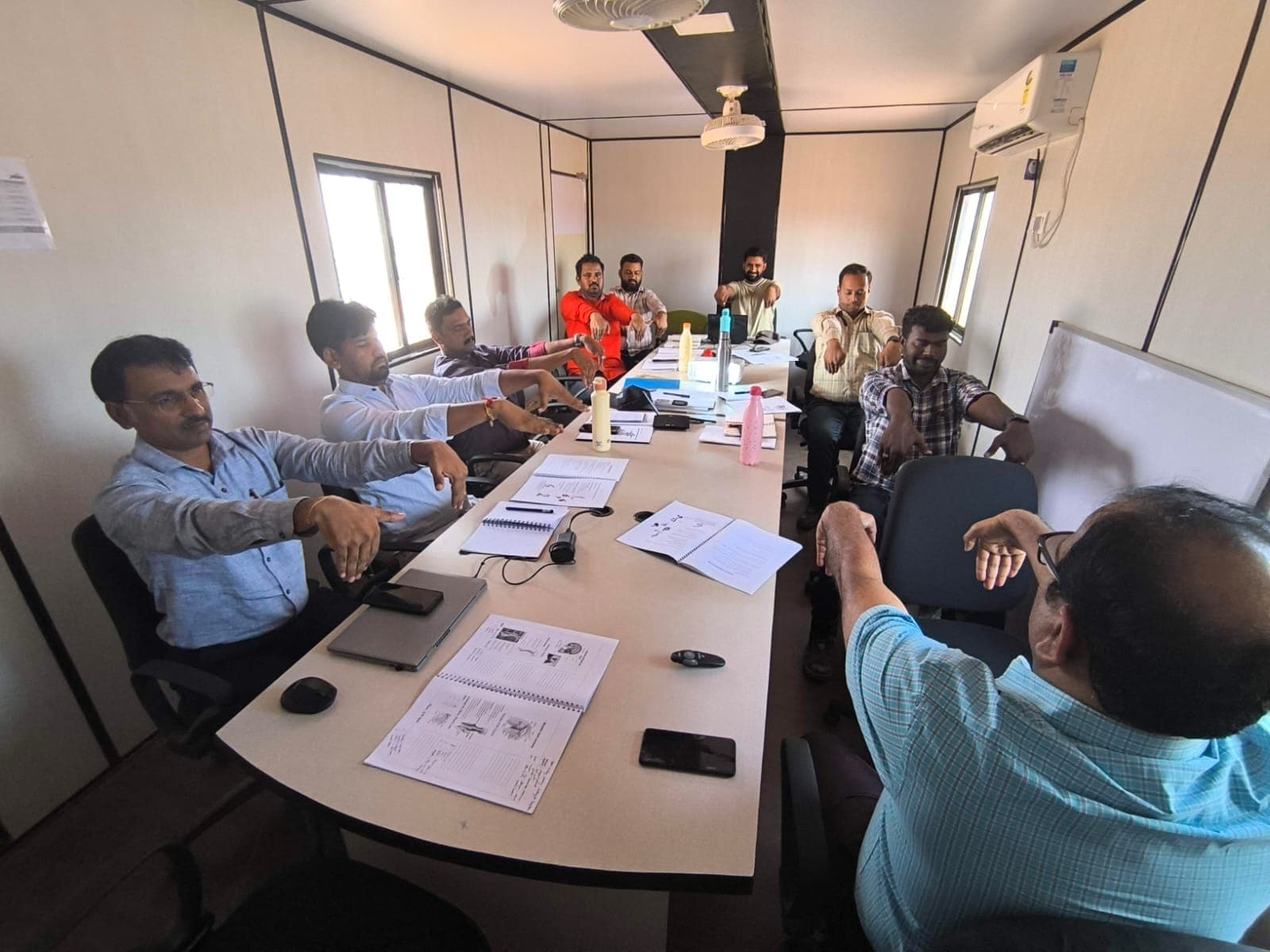
Our Workplace Ergonomics training addresses the everyday postures, movements and workstation layouts that cause musculoskeletal injury over time. To arrange a session, write to info@eduforce.in or message us on WhatsApp at 8779291591.
This article is for general awareness and does not replace medical advice.
Related training
Need help developing workplace safety capability?
Talk to Eduforce about training, consultancy and safety solutions.

Eduforce Team
EHS Training & Safety Solutions
Practical safety guidance from the Eduforce trainers and consultants — written from the training centre, the classroom and the site.
More about Eduforce